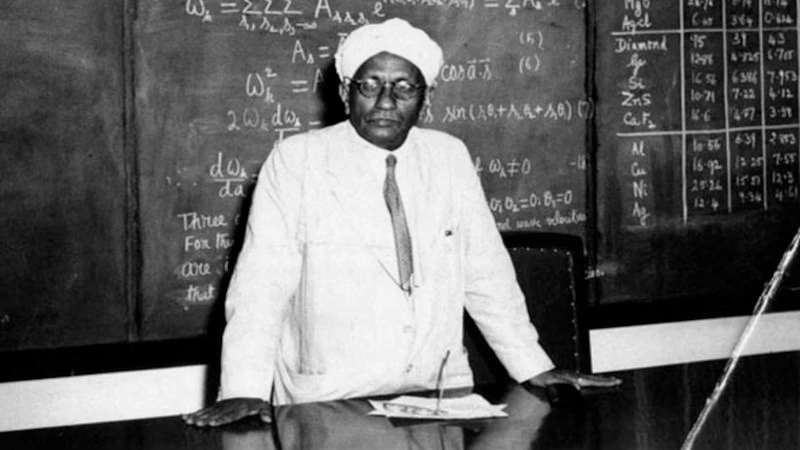
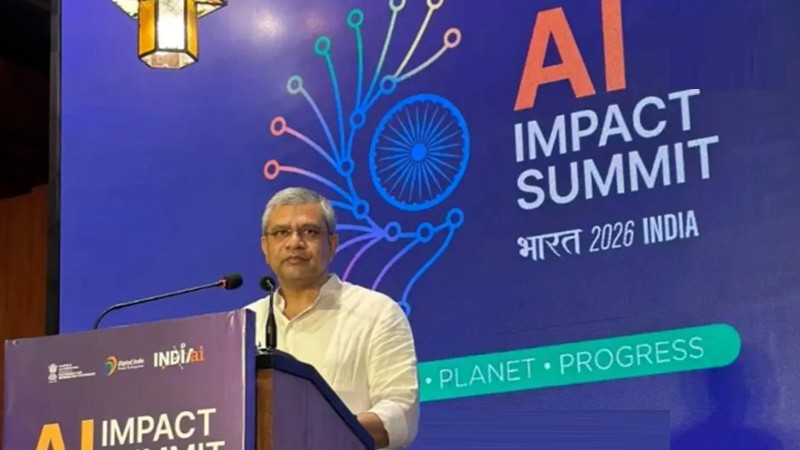
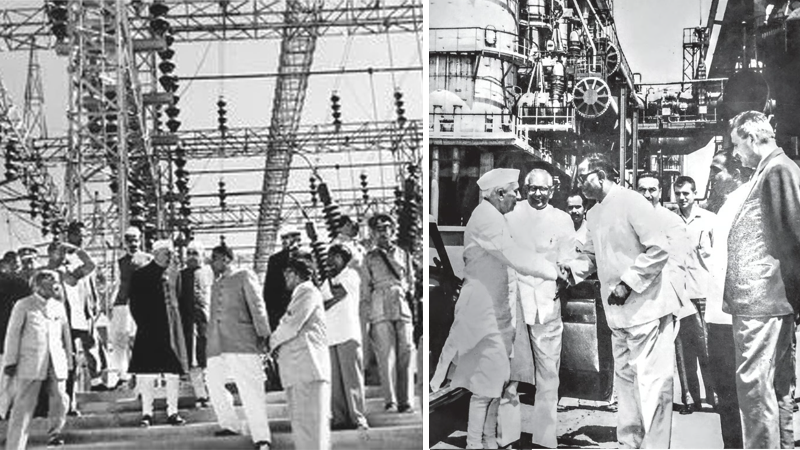
Meadows Foundation Trust Honours Excellence, Service and Human Endeavour

Editorial
The Planet’s Alarming Imbalance: Time to Act on WMO’s Stark Warning
The World Meteorological Organization’s State of the Global Climate 2025 report, released in March 2026, delivers a sobering verdict: Earth’s climate is more out of balance than at any point in recorded history. The past eleven years (2015–2025) stand as the hottest on record, with 2025 ranking as the second or third warmest year at approximately 1.43°C above pre-industrial levels. Earth’s energy imbalance—the gap between incoming solar energy and outgoing heat—has reached unprecedented highs, driven primarily by record greenhouse gas concentrations. The oceans, absorbing roughly 91% of this excess heat, continue to break records, accelerating ice melt, sea-level rise, and extreme weather patterns.
This imbalance is not abstract. It manifests in devastating real-world impacts. Intense heatwaves scorched regions across Europe, East Asia, and North America in 2025, shattering temperature records and triggering wildfires that displaced thousands. Heavy rainfall and tropical cyclones caused widespread flooding, while erratic precipitation patterns intensified droughts elsewhere. These events disrupt food systems, economies, and human health on a global scale. In India, the implications are particularly acute. From deadly heatwaves in the northern plains to erratic monsoons affecting agriculture in the south and northeast, vulnerable communities bear the brunt. Farmers face crop failures, urban centres grapple with heat stress, and coastal areas confront rising seas and cyclones.
The science is unequivocal: human activities, chiefly fossil fuel combustion, are the primary driver. Atmospheric levels of CO₂, methane, and nitrous oxide are at their highest in 800,000 years. The rapid acceleration of the energy imbalance over the past two decades signals that the window for effective intervention is narrowing dangerously. Delaying action risks crossing irreversible tipping points, such as major ice sheet collapse or Amazon dieback.
Yet, this crisis also presents an opportunity for bold leadership. India, as a rising global power and one of the world’s fastest-growing economies, is uniquely positioned to champion solutions. Scaling up renewable energy—solar, wind, and green hydrogen—must accelerate beyond current targets. Investments in climate-resilient infrastructure, sustainable agriculture, and early warning systems can protect millions. Internationally, India should push for equitable climate finance, ensuring developed nations honour their commitments to support adaptation in the Global South.
The WMO report is not merely data; it is a moral imperative. World leaders, businesses, and citizens must move from rhetoric to radical decarbonisation. Every degree of warming avoided saves lives, ecosystems, and trillions in economic losses. The planet’s fever is rising. The prescription is clear: urgent, collective, and transformative action. Failure is not an option.
Violence, Diversions, and the Crisis of Democracy in Bengal
The alleged attack on Trinamool Congress MP Kalyan Banerjee in Hooghly, coming barely a day after the heckling and assault allegations involving Abhishek Banerjee in Sonarpur, has deepened concerns about the deteriorating political climate in West Bengal. Regardless of party affiliations, attacks represent an assault on democratic norms themselves.
Political violence is not new to Bengal. For decades, governments of different ideological shades have been accused of either encouraging political confrontation or failing to curb it effectively. The latest incidents revive an uncomfortable question: are these merely law-and-order failures, or do they reflect a deeper political culture where intimidation and confrontation have become accepted tools of political expression?
The timing of these developments is particularly significant. They have occurred amid intense political debates over the enforcement of cattle slaughter regulations, including provisions that allow slaughter of animals certified to be above fourteen years of age or permanently unfit for work or breeding. The issue has generated strong reactions from both supporters and critics of the policy.
In such a charged atmosphere, critics are naturally asking whether the focus on violent political confrontations is diverting public attention from contentious governance issues. While no evidence currently establishes a direct connection, politics often operates through narratives, and public attention can quickly shift from policy debates to dramatic street-level conflicts.
Equally worrying is the growing normalisation of mob behaviour. Today it is one political leader; tomorrow it may be another. When crowds begin to believe that they can physically target public representatives with impunity, democratic discourse is replaced by intimidation. Such trends weaken institutions, encourage retaliation, and deepen political polarisation.
The responsibility ultimately rests with the government and law-enforcement agencies. A democratic government is judged not by how it protects its supporters, but by how effectively it protects every citizen and political actor, irrespective of party identity. If political leaders can be attacked despite police presence and intelligence mechanisms, serious questions about administrative preparedness become unavoidable.
West Bengal deserves a politics driven by debate, accountability, and public welfare—not by stones, slogans, and street confrontations. Democracy flourishes when disagreements are settled through arguments and ballots, not through violence. The recent incidents should serve as a warning that political rivalry must never be allowed to cross the line into physical hostility.
 SAS Kirmani
Most Popular

Speed of light: The cosmic limit that shapes our universe
September 17, 2025
Beats did announce something, after all
September 17, 2025