Mohan Bhagwat’s American Message: A New Face of the RSS or a Question of Credibility?

Editorial
ISRO’s EOS-05 Launch: A Timely Return to the Skies
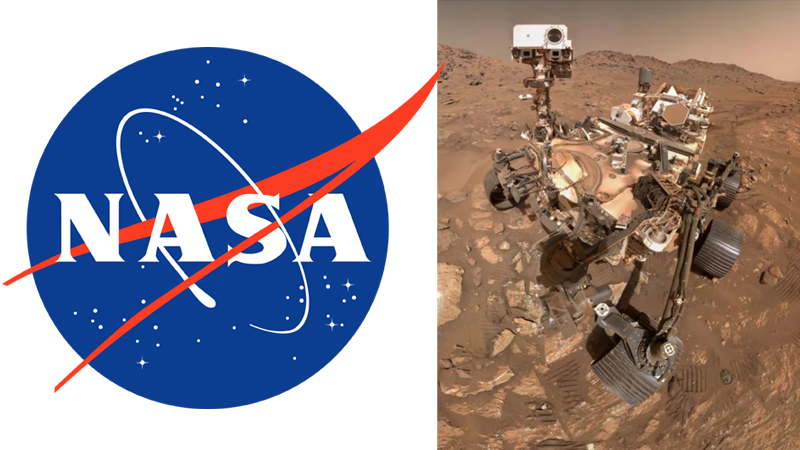
On 4 September 2026, at 2:55 am IST, the Indian Space Research Organisation will lift the curtain on a long-awaited chapter. The GSLV-F17 rocket, thundering off the Second Launch Pad at Sriharikota, will carry EOS-05—also known as GISAT-1A—into a sub-geosynchronous transfer orbit. This mission ends a seven-month silence in India’s launch calendar, a pause forced by the January failure of PSLV-C62. More importantly, it places India’s first dedicated imaging satellite into geosynchronous orbit, nearly 36,000 kilometres above Earth.
EOS-05 is not merely another remote-sensing platform. From its high perch it will stare continuously at the Indian landmass, delivering multi-spectral and hyper-spectral images of selected areas every five minutes and a full continental sweep every half hour at roughly 42-metre resolution. Cyclones forming over the Bay of Bengal, floods surging through the Gangetic plain, forest fires in the Western Ghats, or sudden changes in crop health will no longer wait for the next polar-orbit pass. Decision-makers will have near-real-time eyes in the sky.
The satellite is a determined second chance. Its predecessor, GISAT-1 (EOS-03), was lost in 2021 when the cryogenic upper stage of GSLV-F10 failed to ignite. That setback left a critical gap in persistent geostationary imaging. EOS-05, weighing approximately 2,367 kg and built on the I-2K bus with a 700-mm Ritchey-Chrétien telescope, is designed to close it. Once the GSLV injects it into a highly elliptical transfer orbit, the satellite’s own propulsion will circularise and raise it to its final station—proof of both launch-vehicle reliability and spacecraft maturity.
The broader context is sobering. Two consecutive PSLV failures in 2025–26 grounded India’s workhorse launcher and delayed strategic payloads. In that light, a successful GSLV-F17 flight—the nineteenth of the family—will restore confidence not only in the cryogenic stage but in the agency’s ability to recover. It also signals that India is serious about filling the observational void left by earlier losses.
Yet success on 4 September must be more than a technical tick-box. The data EOS-05 generates must reach disaster-management authorities, agricultural planners and security agencies swiftly and in usable form. Integration with existing polar satellites, ground stations and analytics platforms will determine whether this “eye in the sky” truly transforms decision-making or remains an under-utilised asset.
ISRO has often turned adversity into advancement. Chandrayaan-3 followed earlier lunar setbacks; Aditya-L1 followed developmental delays. EOS-05 now carries the same expectation. If the rocket performs and the satellite settles into its orbit, India will regain a continuous, high-altitude watch over its territory—an essential capability in an era of climate volatility and strategic uncertainty. The seven-month wait ends tomorrow morning. The real test begins the moment the satellite opens its eyes.
India’s Energy Tightrope and Port Strength
India’s crude oil imports from Russia fell sharply in August, declining roughly 26 per cent from July’s record levels to about 2.08 million barrels per day. Moscow’s share of the Indian crude basket dropped from nearly 56 per cent to around 45 per cent. The retreat was driven by tighter Russian export availability—partly the result of Ukrainian attacks on energy infrastructure—and intensified competition from Chinese refiners, who stepped up purchases of the same discounted barrels. Some Indian refinery maintenance added to the temporary dip.
This is not a sudden rejection of Russian oil. Analysts describe it as market normalisation after months of exceptionally high volumes. Russian crude is still expected to remain India’s largest single source, stabilising in the 2.0–2.5 million barrels-per-day range. Yet the episode exposes the fragility of a strategy built heavily on discounted supplies from one origin. With global energy markets already strained by conflict in West Asia and disruptions around key chokepoints, the sudden scarcity of preferential barrels raises costs and forces refiners to scramble for alternatives from Venezuela, the UAE, Angola and elsewhere.
The commercial logic remains clear. Discounted Russian crude has delivered substantial savings for Indian refiners and consumers over the past few years. But reliance at peak levels of 55 per cent carries concentration risk. When those barrels tighten, the cushion shrinks. India’s overall crude imports also eased in August, even as domestic fuel demand stayed resilient. Refiners face a tighter, more expensive autumn unless diversification accelerates and strategic reserves are managed prudently.
Against this backdrop of energy-market volatility, a quieter but significant achievement stands out. Adani Ports and Special Economic Zone handled a record 50 million metric tonnes of cargo in August—its highest monthly volume ever and a 19 per cent year-on-year rise. Dry cargo grew 25 per cent and containers 15 per cent. Year-to-date volumes reached 234.4 million tonnes, up 16 per cent. The performance underscores the resilience of India’s logistics backbone even as energy supplies fluctuate.
Ports and energy security are two sides of the same economic coin. Efficient cargo handling keeps trade flowing, supports manufacturing and cushions the impact of higher import costs. The record throughput at Adani Ports signals that physical infrastructure is expanding and diversifying—precisely the kind of capacity India needs when geopolitical shocks disrupt traditional supply lines.
The August numbers therefore carry a dual message. The drop in Russian crude imports is a reminder that cheap energy from a single source cannot be taken for granted. The surge in port volumes is evidence that India is building the logistical muscle to absorb such shocks. Sustaining both energy diversification and port capacity will determine how smoothly the economy navigates the uncertain months ahead.

 SAS Kirmani
Most Popular

Speed of light: The cosmic limit that shapes our universe
September 17, 2025
Beats did announce something, after all
September 17, 2025