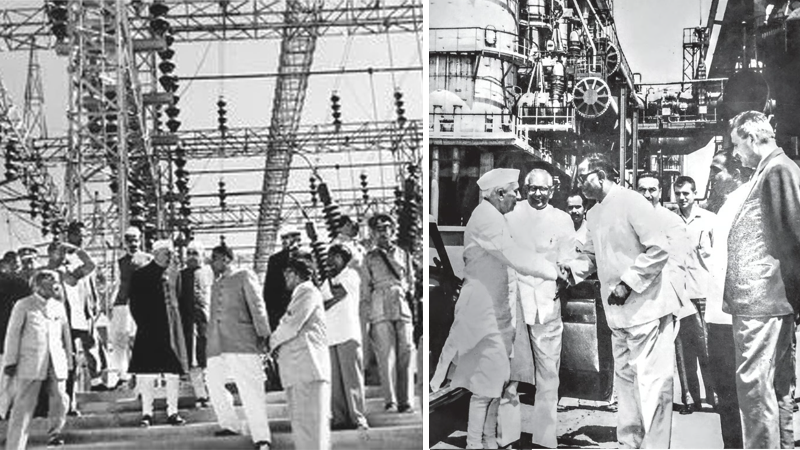
From 'Garibi Hatao' to Poverty Reduction: India's Long Journey Towards Economic Dignity

Editorial
Trump’s Aid Cut to Israel – A Strategic Shockwave on Election Day
On the day American voters went to the polls for the 2026 midterms, President Donald Trump announced that the United States would end its long-standing annual security assistance to Israel, estimated at $3.8–4 billion. The timing was deliberate, the message unmistakable. A cornerstone of the US-Israel relationship for decades was being dismantled at a moment of maximum political and geopolitical tension.
This assistance has never been charity. It has underwritten Israel’s qualitative military edge, funded missile defence systems such as Iron Dome, and signalled American commitment in a region where deterrence matters more than rhetoric. Ending it abruptly raises immediate questions about Israel’s ability to maintain that edge while simultaneously confronting Iranian proxies, managing the aftermath of prolonged conflict, and absorbing the economic costs of sustained military mobilisation.
Supporters of the decision will argue that it reflects an overdue recalibration. American taxpayers, they say, should not indefinitely subsidise an ally capable of standing on its own. They will point to Israel’s advanced economy, its thriving defence industry, and the principle that alliances must evolve rather than calcify into permanent entitlement. In an era of competing global priorities and domestic fiscal pressure, every dollar spent abroad is a dollar not spent at home. The announcement also arrives against the backdrop of the ongoing confrontation with Iran, where Trump has pursued a mix of military pressure and transactional diplomacy. Cutting the aid package may be intended as leverage — a signal that continued American support is no longer automatic
Critics, however, see a dangerous erosion of credibility. They argue that sudden abandonment of a close partner emboldens adversaries, particularly Iran and its network of proxies. It risks conveying that American commitments are contingent on the political weather in Washington rather than enduring strategic interests. For Israel, the practical consequences could include delayed procurement, reduced readiness, and greater vulnerability at a time when the regional security environment remains volatile. Domestically, the move lands amid deep polarisation: it may please isolationist and progressive constituencies critical of Israeli policy, while alienating traditional Republican and evangelical supporters who view the alliance as both moral and strategic.
The deeper issue is not the precise dollar figure. It is the precedent. Alliances rest on predictability as much as capability. When a president treats a foundational security relationship as a bargaining chip on election day, the message travels far beyond Jerusalem. Other partners will watch closely. Adversaries will draw their own conclusions.
Trump’s announcement forces a necessary debate about the terms of American engagement in the Middle East. But timing and method matter. Strategic realignment requires careful sequencing, clear alternatives, and attention to second-order effects. Abrupt termination of a decades-old commitment, announced in the heat of a midterm campaign, risks substituting drama for durable strategy. The coming weeks will reveal whether this was calculated pressure or political improvisation — and whether the costs will be borne primarily by Israel, by American interests in the region, or by both.
Bombay High Court and the Dia Mirza Diwali Video – Secularism, Speech, and Administrative Overreach
The Bombay High Court’s direction to the Brihanmumbai Municipal Corporation to restore actor Dia Mirza’s eco-friendly Diwali campaign video is more than a routine administrative correction. By ordering the re-upload and invoking secular values, the court has drawn a clear line between legitimate regulation and selective suppression of public messaging.
Mirza’s video promoted a quieter, less polluting Diwali — a message rooted in environmental concern rather than religious critique. Its removal by the BMC raised legitimate questions about the grounds for the action. If the video contained no call to violence, no hate speech, and no clear legal violation, its deletion appeared arbitrary. The High Court’s intervention correctly treated this as an issue of free expression and institutional accountability rather than a cultural contest.
Secularism, as the court appears to have understood it, does not require the state to silence environmental or social messaging simply because it intersects with a religious festival. A secular state is expected to remain neutral among faiths while protecting the right of citizens to advocate for cleaner air, reduced noise, and public health. Diwali, like other festivals, has always contained both tradition and reform. Efforts to reduce firecracker use have been part of public discourse for years, driven by measurable spikes in air pollution and hospital admissions. Treating such advocacy as inherently anti-religious risks collapsing legitimate civic debate into identity conflict.
At the same time, the episode exposes the dangers of administrative overreach. Municipal bodies are not cultural censors. Their mandate is civic order, not the policing of ideas that may discomfort some sections of the public. When officials delete content without transparent reasoning or due process, they invite judicial scrutiny — and rightly so. Courts exist precisely to check such excesses.
Critics of the video and of the court’s order may argue that festivals carry deep cultural and emotional weight, and that messaging around them should be handled with greater sensitivity. That concern is not without merit. Environmental campaigns are more effective when they avoid appearing dismissive of tradition. Yet sensitivity cannot become a veto power over speech. A democracy that allows only “comfortable” messages is no longer protecting pluralism; it is managing it.
The larger principle at stake is institutional restraint. Governments and civic bodies should not pick and choose which social causes may be voiced during festivals. The High Court’s order reaffirms that the default position must favour openness, not deletion. Environmental responsibility and cultural celebration are not zero-sum. A mature public sphere can accommodate both. The restoration of the video is a small but necessary reminder that secular governance protects the space for such accommodation rather than shrinking it.
 SAS Kirmani
Most Popular

Speed of light: The cosmic limit that shapes our universe
September 17, 2025
Beats did announce something, after all
September 17, 2025