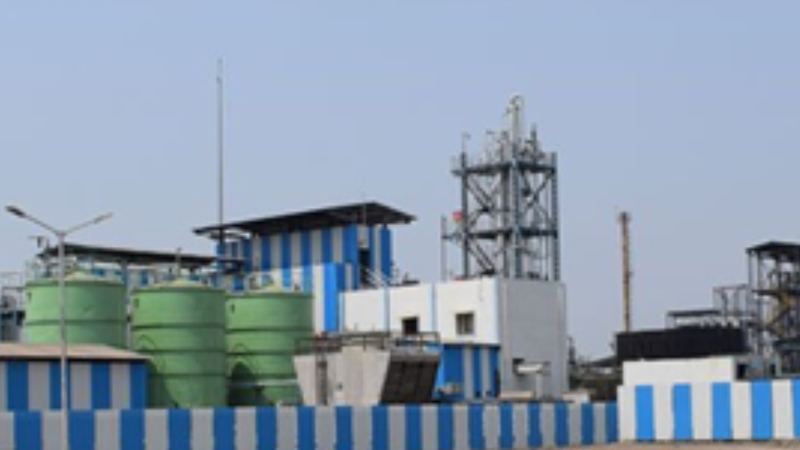
Meadows Foundation Trust Honours Excellence, Service and Human Endeavour

Editorial
Justice or Imperial Overreach? The Capture of Nicolás Maduro
The audacious U.S. military operation that seized Venezuelan President Nicolás Maduro and his wife, Cilia Flores, from their Caracas compound on January 3 marks a watershed moment in hemispheric relations—one that blends triumphant law enforcement rhetoric with the unmistakable echoes of gunboat diplomacy. President Trump has hailed “Operation Absolute Resolve” as a flawless strike against a “narco-terrorist,” delivering Maduro to New York for trial on long-standing charges of narco-terrorism conspiracy and cocaine trafficking. Yet beneath the celebrations in Miami’s Venezuelan exile communities lies a troubling question: Has the United States crossed a red line into outright imperialism, driven as much by greed for Venezuela’s vast oil reserves as by justice?
Maduro’s indictment, unsealed and superseding a 2020 case, paints a damning picture of a regime allegedly intertwined with drug cartels, flooding U.S. streets with cocaine while enriching officials. The operation’s precision—over 150 aircraft disabling defenses, Delta Force extracting the couple without American fatalities—demonstrates unmatched U.S. capability. For millions of Venezuelans who endured hyperinflation, starvation, and repression under Maduro’s rule, his removal offers hope. Over 8 million have fled; political prisoners languish. Ending this chapter could pave the way for democratic transition and economic revival.
But the means undermine the ends. This was no extradition or invited intervention; it was an unprovoked invasion of a sovereign state, violating the UN Charter’s prohibition on force absent Security Council approval or self-defense. No imminent threat justified airstrikes on military bases or the blackout of Caracas. Comparisons to the 1989 Panama invasion falter—Noriega endangered U.S. citizens directly; here, drug charges, however grave, do not authorize abduction of a sitting head of state. International condemnation from Russia, China, and much of Latin America is predictable, but even allies express unease over the precedent: What stops similar actions against other adversarial leaders?
Oil looms large in the skepticism. Venezuela possesses the world’s largest proven reserves, crippled by sanctions and mismanagement. Trump’s blunt declaration that the U.S. will “run” the country temporarily—to “get the oil flowing” and fund reconstruction—fuels accusations of resource grab. While stabilization could benefit Venezuelans through restored production and humanitarian aid, it reeks of 20th-century interventions where U.S. interests trumped local sovereignty. Critics rightly ask: Is this about fentanyl on American streets, or securing cheap heavy crude for U.S. refineries?
As Maduro awaits arraignment in Manhattan today, the trial may expose regime corruption but cannot legitimize the raid. The U.S. risks alienating the region, emboldening adversaries, and eroding its moral authority. True justice for Venezuela demands multilateral support, free elections, and accountability—not unilateral might. This bold stroke may deliver short-term victory, but at the cost of long-term credibility in a multipolar world.
When Governance Overrides the Game
The release of Bangladesh fast bowler Mustafizur Rahman by the Kolkata Knight Riders (KKR), reportedly following instructions from the Board of Control for Cricket in India (BCCI), once again brings into sharp focus the uneasy balance between franchise cricket and international obligations. While the decision may be administratively justified, it raises important questions about player autonomy, the role of national boards, and the evolving power dynamics in global cricket.
Mustafizur Rahman is not just another overseas recruit. He is a proven match-winner, especially in limited-overs formats, admired for his deceptive cutters and calm under pressure. For a franchise like KKR, which invests heavily in scouting and strategy, releasing such a player mid-cycle is not merely a tactical adjustment but a disruption. If the move indeed came at the behest of the BCCI, it underlines how the Indian board’s influence extends well beyond the boundary ropes of the IPL.
From the BCCI’s perspective, the rationale is not difficult to understand. The IPL calendar often clashes with international commitments, and boards are increasingly sensitive about workload management, bilateral series, and the primacy of international cricket. Allowing or disallowing player participation becomes a matter of policy, not sentiment. In that sense, the instruction to release Mustafizur can be defended as an attempt to maintain order in an overcrowded cricketing ecosystem.
However, the broader implications are troubling. The IPL markets itself as a global league, attracting talent from across cricketing nations. When players are pulled out due to unilateral decisions by a host board, it risks creating an uneven playing field. Smaller boards like Bangladesh Cricket Board (BCB) often find themselves caught between protecting national interests and supporting their players’ professional opportunities. Players, meanwhile, are left with little say in decisions that directly affect their careers and earnings.
There is also the question of precedent. If such instructions become routine, franchises may hesitate before investing in overseas players whose availability can be curtailed at short notice. This could quietly reshape team compositions and marginalize players from certain countries, undermining the IPL’s claim of being truly international.
Cricket today stands at a crossroads between commerce and country. The Mustafizur Rahman episode is a reminder that while governance is necessary, it must be transparent, consultative, and fair. Otherwise, decisions taken in boardrooms will continue to overshadow the spirit of the game—and the players who are its true stakeholders.
 SAS Kirmani
Most Popular

Speed of light: The cosmic limit that shapes our universe
September 17, 2025
Beats did announce something, after all
September 17, 2025