Meadows Foundation Trust Honours Excellence, Service and Human Endeavour

Editorial
Accountability in the Hills: The Pema Khandu Probe and the Imperative of Institutional Integrity
The protests sweeping Itanagar in early May 2026, where civil society groups demand that Arunachal Pradesh Chief Minister Pema Khandu temporarily step aside, highlight a fundamental tension in Indian democracy: the balance between presumption of innocence and the need for unhindered investigations into those holding high office. The trigger is the Supreme Court’s April 6 order directing the CBI to conduct a preliminary enquiry into the award of public works contracts worth approximately ₹1,270 crore to firms allegedly linked to Khandu, his brother, step-mother, and other relatives over the decade from 2015 to 2025.
This is not a routine matter. The apex court acted on public interest litigations citing serious allegations of nepotism, conflict of interest, and irregularities in tender processes. CAG reports had earlier flagged gaps in decision-making. The bench, led by Justice Vikram Nath, emphasized that public resources cannot be distributed at the “whims” of political functionaries and stressed the need for transparency in a state where infrastructure development is both urgent and heavily dependent on government spending. The CBI has been given timelines to register the enquiry and submit a status report, with directions to preserve records.
Khandu has dismissed the demands for resignation, describing the preliminary enquiry as a procedural step that does not imply guilt and pledging full cooperation with the agency. His supporters argue that stepping down would amount to political vendetta and undermine governance in a sensitive border state. Yet, the counter-argument from protesters and opposition voices carries weight: when the Chief Minister himself is under scrutiny for decisions taken under his watch, continued occupancy of office risks influencing witnesses, records, or the administrative machinery. Precedents exist where leaders have stepped aside during probes to uphold public confidence, without prejudice to the final outcome.
Arunachal Pradesh’s unique challenges amplify the stakes. As a strategically vital frontier state with difficult terrain, its development hinges on clean and efficient execution of road, power, and connectivity projects. Any perception of favoritism erodes trust in governance, discourages genuine investors, and fuels cynicism among citizens who already grapple with connectivity deficits and economic fragility. The Supreme Court’s intervention, far from being an overreach, reaffirms judicial oversight as a check against potential abuse of power in remote regions where local accountability mechanisms can sometimes falter.
The BJP, which champions anti-corruption nationally, faces a credibility test here. Its response so far has leaned toward downplaying the matter as premature. A more consistent stance would be to let institutions function freely while signaling zero tolerance for wrongdoing, irrespective of rank. Political loyalty must not eclipse ethical governance.
Ultimately, this episode is an opportunity. A thorough, time-bound CBI enquiry—monitored by the highest court—must establish facts without fear or favor. If wrongdoing is established, accountability must follow swiftly. If the allegations prove unsubstantiated, Khandu deserves a clean chit and the chance to focus on governance. For now, the wise course lies in prioritizing institutional integrity over individual continuity. Protests must remain peaceful, and the state machinery must facilitate, not obstruct, the probe. Arunachal’s future—marked by aspirations for faster development and stronger integration—depends on governance that inspires confidence, not controversy. Only transparent resolution can restore faith in the system among the people of the hills.
A Pause, Not Peace: Fragile Calm in the Strait of Hormuz
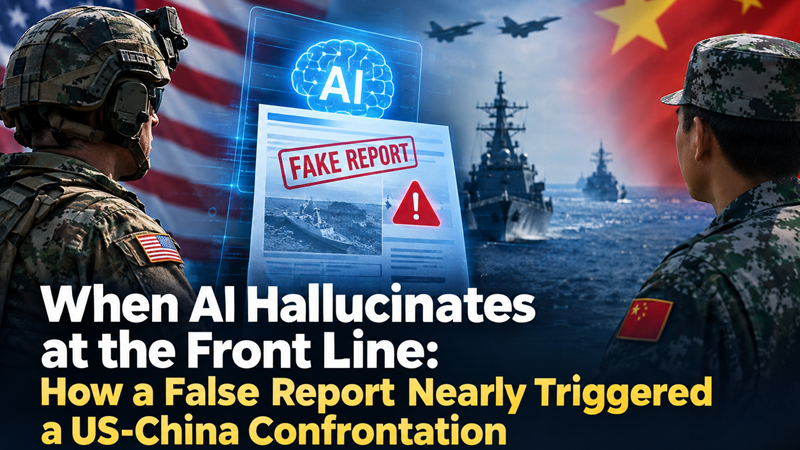
The recent announcement by Donald Trump to pause “Project Freedom” in the Strait of Hormuz offers a momentary easing of tensions—but not a resolution. The decision, framed as a diplomatic opening toward a potential agreement with Iran, reflects a familiar pattern in high-stakes geopolitics: escalation followed by tactical restraint.
“Project Freedom,” a U.S.-led naval effort to guide commercial vessels through one of the world’s most critical oil routes, had emerged as a direct response to Iran’s blockade and military posturing. The strait, through which nearly a fifth of global oil supply passes, had effectively become a flashpoint of global economic anxiety.
The pause, however, is less a sign of peace than of recalibration. Trump himself has linked the decision to “great progress” in negotiations, reportedly encouraged by international mediators including Pakistan. Yet crucially, the U.S. blockade remains intact, and military readiness continues. This duality—talks alongside coercion—underscores the fragile nature of the current calm.
Diplomacy Under the Shadow of Force
The strategic logic behind the pause is clear. By halting direct naval escorts, Washington seeks to create diplomatic space without appearing to concede ground. It is a calculated gamble: offering Iran an incentive to negotiate while retaining pressure through sanctions and military presence.
However, this approach carries inherent risks. Reports indicate that despite a ceasefire framework, low-level hostilities persist, including threats to shipping and regional instability. Such conditions raise doubts about whether negotiations can translate into a durable settlement or merely postpone renewed confrontation.
Global Stakes, Local Theatre
The implications extend far beyond the Gulf. Energy markets, already rattled by disrupted shipping, remain sensitive to even minor escalations. Prolonged uncertainty in the Strait of Hormuz risks sustained volatility in oil prices, with cascading effects on global inflation and economic stability.
For countries like India, heavily dependent on Gulf energy imports, the situation is particularly consequential. A stable Hormuz is not just a regional concern—it is a global necessity.
The Illusion of De-escalation
It would be premature to interpret the pause as a turning point. Rather, it reflects the limitations of military solutions in resolving complex geopolitical conflicts. The underlying issues—regional power rivalry, nuclear ambitions, and strategic distrust—remain unresolved.
Moreover, the absence of transparency around the reported “progress” in talks invites skepticism. Without clear terms or verified commitments, the pause risks becoming a symbolic gesture rather than a substantive breakthrough.
The easing of tensions in the Strait of Hormuz is welcome, but it is best understood as a pause in confrontation, not its end. Diplomacy has been given a narrow window—but whether it leads to lasting peace or merely delays the next crisis will depend on the willingness of both sides to move beyond brinkmanship.
For now, the world watches a familiar script unfold: a fragile calm, suspended between hope and uncertainty.
 SAS Kirmani
Most Popular

Speed of light: The cosmic limit that shapes our universe
September 17, 2025
Beats did announce something, after all
September 17, 2025