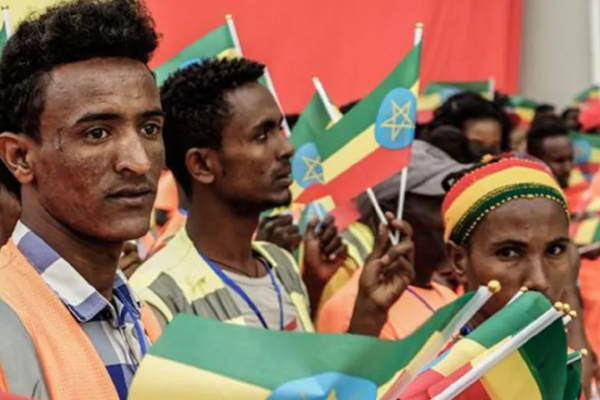
Meadows Foundation Trust Honours Excellence, Service and Human Endeavour

Editorial
Nationwide Bharat Bandh against Labour Code
The nationwide Bharat Bandh on February 12, 2026, marks a significant escalation in India’s long-simmering labour and agrarian discontent. With over 30 crore workers reportedly participating—called by a coalition of 10 central trade unions including INTUC, AITUC, CITU, HMS, and others, and backed by farmer outfits like Samyukta Kisan Morcha (SKM)—this strike stands as one of the largest coordinated protests in recent memory. Spanning nearly 600 districts, it has already caused visible disruptions in transport, banking, public services, and daily commerce in many states, particularly in strongholds like Odisha, Assam, Kerala, and West Bengal.
At its core, the bandh protests the implementation of the four consolidated labour codes (enacted after replacing 29 older laws), which unions argue have fundamentally eroded worker protections. Critics contend these codes dilute job security by easing hiring and firing processes, reduce bargaining power, limit social security coverage for informal workers, and tilt the balance heavily toward employers in the name of “ease of doing business.” Stagnant real wages amid rising living costs, aggressive privatisation of public sector enterprises, and inadequate safeguards for social security further fuel the anger. Farmers’ groups have amplified the call, opposing proposed India-US trade policies and frameworks that they fear could open Indian agriculture to unfair competition, undermine domestic dairy and seed sectors, and exacerbate rural distress through bills like the Draft Seed Bill or Electricity Amendment Bill.
This mobilisation reflects deeper structural anxieties in India’s economy. While the government has positioned the labour reforms as modernising outdated colonial-era laws to attract investment and boost formal employment, unions view them as a corporate-friendly assault on hard-won rights. The inclusion of demands like restoring the old pension scheme, strengthening MGNREGA guarantees, and scrapping policies seen as weakening civil services highlights a broader rejection of what protesters term “anti-worker, anti-farmer, pro-corporate” governance.
Yet, the effectiveness and long-term impact of such bandhs remain contested. Past nationwide strikes have often disrupted life temporarily but rarely forced policy reversals without sustained negotiation or political pressure. Critics of the strike argue it inconveniences the public, hampers economic activity, and may even alienate moderate workers who prefer dialogue over shutdowns. Some voices within the labour movement itself question whether repeated bandhs dilute their potency without building broader alliances or alternative economic visions.
Nevertheless, today’s unprecedented scale—potentially the largest since recent years—signals that economic discontent is widespread and cannot be dismissed lightly. For the government, it presents an opportunity to engage meaningfully rather than confront. Ignoring these grievances risks further polarisation in a workforce where informal and precarious employment dominates. True progress lies not in suppression or symbolic concessions, but in genuine dialogue that balances growth imperatives with equitable protections. The Bharat Bandh is a clarion call: India’s working millions demand to be heard, and sustainable development cannot ignore their voices.
Talks or Threats: Trump’s High-Stakes Gamble on Iran’s Nuclear Future
The US-Iran negotiations on February 12, 2026, represent a high-stakes diplomatic tightrope amid renewed tensions in the Middle East. Following a lengthy White House meeting with Israeli Prime Minister Benjamin Netanyahu on February 11, President Donald Trump publicly stated that “nothing definitive” was reached, but he “insisted” that talks with Iran continue to determine if a deal can be “consummated.” He described a potential agreement as his preference, while ominously adding that failure would leave “what the outcome will be” open-ended—a thinly veiled warning of military consequences.
This latest chapter builds on indirect talks held in Oman on February 6, the first since Israel’s 12-day war on Iran in June 2025, which devastated Tehran’s nuclear facilities under Operation Midnight Hammer. That conflict, triggered after earlier 2025 negotiations collapsed, set back Iran’s program significantly but left deep mistrust. Trump’s second-term approach revives his “maximum pressure” strategy: massive naval deployments—including potential second carrier strike groups—to the Gulf, intensified sanctions, and explicit threats of “something very tough” if demands aren’t met. He has repeatedly conditioned any deal on Iran abandoning nuclear weapons ambitions entirely, while Israel pushes for broader concessions covering ballistic missiles and support for proxies like the Houthis and Hezbollah—elements Tehran refuses to negotiate.
Netanyahu’s visit, his seventh with Trump since January 2025, underscored Israel’s existential fears. Reports indicate he presented intelligence on Iran’s rapid missile reconstitution (potentially 1,800–2,000 missiles soon) and urged against a narrow nuclear-only pact. Yet Trump appears to prioritize diplomacy first, describing recent Oman talks as “very good” and signaling openness to a phased deal, even as advisors like Jared Kushner reportedly favor quicker resolution.
The risks are profound. A successful agreement could de-escalate a volatile region scarred by recent war, protests in Iran, and proxy conflicts. It might stabilize global energy markets and curb proliferation. But failure invites catastrophe: further US or Israeli strikes, Iranian retaliation via missiles or allies, and broader war drawing in Gulf states. Iran’s insistence that missiles and regional influence are non-negotiable red lines clashes with US-Israeli maximalism.
Trump’s carrot-and-stick rhetoric—preferring a deal but ready for force—echoes his first-term JCPOA withdrawal, yet the post-war context demands nuance. Diplomacy here isn’t weakness but necessity after military action proved costly and incomplete. For all parties, the window is narrow: sustained talks offer the best path to verifiable limits on Iran’s nuclear path without endless confrontation. Ignoring this risks repeating cycles of escalation that benefit no one. The coming weeks will test whether threats yield concessions or ignite another crisis—history suggests the former is preferable, but only if backed by realistic compromise.
 SAS Kirmani
Most Popular

Speed of light: The cosmic limit that shapes our universe
September 17, 2025
Beats did announce something, after all
September 17, 2025