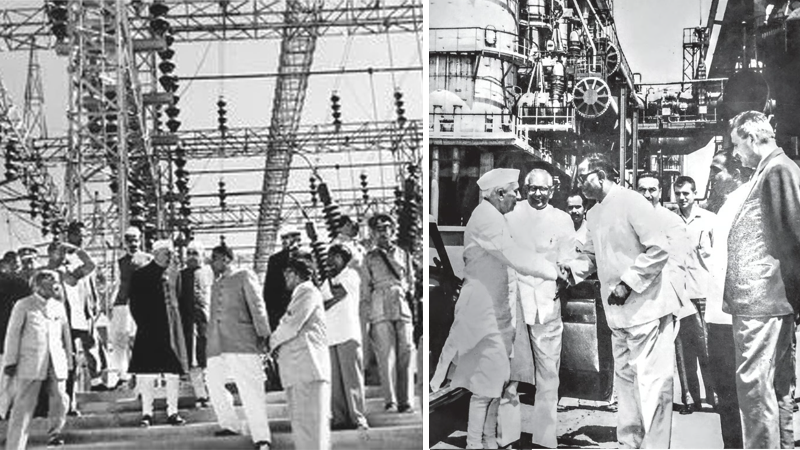
Meadows Foundation Trust Honours Excellence, Service and Human Endeavour

Editorial
The Silent Victims of War: Children in the Middle East Conflict
As the conflict in the Middle East intensifies, the greatest tragedy lies not only in the destruction of cities or the shifting balance of power, but in the devastating toll on children. A recent statement by UNICEF paints a grim picture of a humanitarian catastrophe unfolding across the region. In just ten days of escalating violence, more than 1,100 children have reportedly been killed or injured. The figures include around 200 children in Iran, 91 in Lebanon, four in Israel, and one in Kuwait. Disturbingly, these numbers are expected to rise as the conflict spreads.
War has always carried a heavy human cost, but when children become the primary victims, it exposes the profound failure of humanity. Millions of young lives are now caught in the crossfire, deprived not only of safety but also of their basic rights to education, shelter, and health care. Schools across the region have been forced to close, leaving countless children without learning or stability. Many families have been displaced, fleeing bombardments that have destroyed homes and neighbourhoods.
Even more alarming is the damage inflicted on civilian infrastructure. Hospitals, schools, water systems, and sanitation facilities—essential lifelines for survival—have been attacked or severely damaged during the hostilities. Such destruction does not merely disrupt daily life; it threatens the very survival of vulnerable populations, particularly children who rely heavily on these services. Without access to medical care, clean water, or safe shelter, the risk of disease, malnutrition, and long-term trauma grows rapidly.
International humanitarian law clearly demands that civilians, especially children, be protected during armed conflict. Attacks that harm civilians or destroy essential services raise serious questions about compliance with these legal and moral obligations. The global community cannot afford to remain indifferent when such grave violations occur.
The appeal from UNICEF is therefore both urgent and necessary. It calls on all parties involved in the conflict to immediately cease hostilities and return to diplomatic negotiations. Equally important is the demand that military operations take every possible precaution to minimise civilian harm and avoid the use of weapons that disproportionately affect children.
Beyond politics and military strategies, the conflict reminds us of a fundamental truth: wars may be fought by adults, but their deepest scars are often carried by children. Nearly 200 million children across the region now live under the shadow of violence and uncertainty. Their future depends on how quickly the world acts to restore peace and protect their rights.
The suffering of children must never be dismissed as collateral damage. It should instead serve as the strongest moral argument for ending the violence and rebuilding hope in a region that has already endured far too much conflict.
Debating West Asia in Parliament: A Test for India’s Democratic Maturity
The escalating crisis in West Asia has once again brought the region to the centre of India’s political discourse. With tensions spreading across multiple fronts and the spectre of prolonged conflict looming large, the Indian opposition has demanded a full debate in Parliament on the issue and its possible implications for the country. Rising fuel prices, economic uncertainty, and the safety of Indian citizens in the region are among the concerns being raised. The debate has also turned politically sharp, with Rahul Gandhi criticising the government’s approach and calling for greater transparency, while the ruling establishment led by Narendra Modi accuses the opposition of disrupting parliamentary proceedings for political mileage.
The opposition’s demand for discussion is not without merit. West Asia remains strategically and economically vital for India. Millions of Indian expatriates live and work across the Gulf region, and a significant portion of India’s crude oil imports comes from this volatile geography. Any sustained conflict could push up global energy prices, strain India’s fiscal balance, and disrupt remittance flows that support many Indian families. In such a situation, Parliament—the highest democratic forum—should ideally become the space where national concerns are openly discussed and policy responses clarified.
However, the government appears cautious. Officials argue that sensitive diplomatic matters require careful handling and that noisy confrontations in Parliament could undermine India’s balanced foreign policy. India has traditionally maintained working relations with multiple actors in the region, including Israel, Iran, and Arab nations, a diplomatic equilibrium that requires nuanced engagement rather than rhetorical escalation.
The unfortunate reality is that the issue has quickly become entangled in domestic political rivalry. Opposition leaders insist that the government must explain its preparedness for potential economic shocks and clarify its diplomatic stance. On the other hand, government ministers accuse the opposition of seeking headlines rather than solutions, claiming that frequent disruptions in Parliament make constructive debate difficult.
Yet this political back-and-forth risks missing the larger point. The West Asia crisis is not merely a foreign policy issue; it has direct implications for India’s energy security, inflation trajectory, trade routes, and the welfare of Indian workers abroad. Democratic accountability demands that the government communicate its strategy and preparedness clearly to the nation through Parliament.
In times of international turbulence, mature democracies strengthen their institutions by encouraging debate rather than avoiding it. India’s Parliament should rise above partisan hostility and address the issue with seriousness and sobriety. A transparent discussion would not weaken diplomacy; rather, it would reinforce public confidence that the country is prepared to navigate an increasingly uncertain world.
 SAS Kirmani
Most Popular

Speed of light: The cosmic limit that shapes our universe
September 17, 2025
Beats did announce something, after all
September 17, 2025