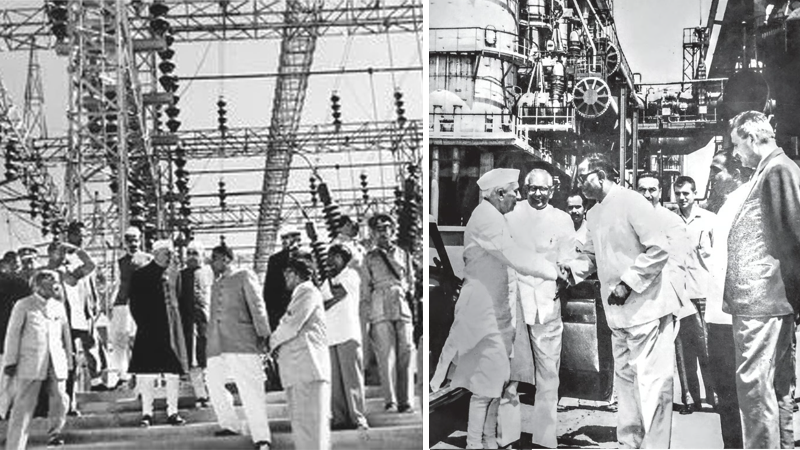
From 'Garibi Hatao' to Poverty Reduction: India's Long Journey Towards Economic Dignity

Editorial
Delhi’s Annual Chokehold: When ‘Severe’ Becomes the New Normal
Delhi has once again woken up to a sky the colour of dirty dishwater. On 13 November 2026, the capital’s Air Quality Index crossed into the ‘severe’ category, with readings near AIIMS touching 418 and several stations, including IIT Delhi, pushing past 480. Visibility collapsed under a thick blanket of smog. This is no longer a seasonal surprise; it is a recurring public-health emergency that the city has learned to treat with weary resignation.
The numbers are stark, but the lived experience is worse. Schoolchildren cough through morning assemblies, elderly citizens struggle for breath, and hospitals prepare for the familiar spike in respiratory cases. For millions who cannot afford air purifiers or the luxury of working from sealed offices, the outdoors has become a toxic hazard. The post-Diwali spike, combined with stubble burning in neighbouring states and unfavourable meteorological conditions, has produced a perfect storm. Yet the pattern is so predictable that the only real surprise is that we still act surprised.
Year after year, the same sequence unfolds: warnings are issued, emergency measures are announced, and then the political blame game begins. Punjab and Haryana are accused of inadequate action on crop residue. The Centre and the Delhi government trade charges over enforcement of the Graded Response Action Plan. Construction dust, vehicular emissions, and industrial pollution continue largely unchecked. Meanwhile, citizens are told to stay indoors, wear masks, and wait for the wind to change. This is not governance; it is weather-dependent crisis management.
What is missing is the political will to treat clean air as a non-negotiable right rather than a seasonal talking point. Short-term steps—odd-even restrictions, construction bans, and anti-smog guns—offer temporary relief at best. Real progress requires structural change: accelerated transition to cleaner public transport, strict enforcement against industrial and construction violations, financial and technical support for farmers to manage stubble without burning, and regional coordination that rises above electoral calculations.
Delhi’s air crisis is also a national embarrassment. A capital that aspires to global city status cannot remain one of the most polluted urban centres on the planet every winter. The health costs are already enormous—lost productivity, rising medical expenses, and shortened lives. The environmental cost is equally severe. Continuing on the present path is not merely negligent; it is a quiet form of collective self-harm.
The AQI numbers will eventually improve when the weather cooperates. The deeper question is whether the next severe spell will still find us reacting with the same mixture of alarm and inertia. Until governments treat the right to breathe clean air with the same seriousness they claim to reserve for national security, Delhi will keep choking—and the rest of India will keep watching in resigned silence.
When Hospitals Become Battlefields
An Israeli airstrike on a building at Nasser Hospital in southern Gaza has killed at least six people, including a surgeon. Israel states that it targeted militants operating from or near the site. The immediate human cost is clear and tragic: medical staff and patients caught in the crossfire of a war that has already exacted an enormous toll on civilians.
Hospitals occupy a special place in the laws of war. International humanitarian law grants them protected status precisely because the wounded and the sick, along with those who care for them, must be shielded from the fighting. That protection is not absolute. It can be lost if a hospital is used for military purposes—storing weapons, harbouring combatants, or serving as a command post. Israel has long alleged that Hamas and allied groups systematically embed themselves in civilian infrastructure, including medical facilities, precisely to exploit this legal and moral shield. Palestinian authorities and many international observers reject or dispute the scale of such claims and accuse Israel of disproportionate force and insufficient regard for civilian life.
In the fog of this particular strike, independent verification remains difficult. Access is restricted, information is contested, and both sides have incentives to shape the narrative. What can be said with certainty is that the death of a surgeon and other civilians inside a hospital compounds an already catastrophic humanitarian situation in Gaza. It also deepens the erosion of trust in the very institutions meant to restrain the conduct of hostilities.
Urban warfare against an adversary that operates among civilians creates brutal dilemmas. Precision is imperfect. Intelligence can be wrong. The presence of fighters does not erase the duty to take feasible precautions to spare non-combatants. At the same time, the deliberate use of hospitals and other protected sites as shields, if proven, is itself a serious violation that endangers the very people those sites exist to protect. Both the attacking force and the defending force bear responsibilities under the laws of war; neither can outsource the moral weight of civilian deaths to the other.
The larger pattern is more troubling still. Each incident of this kind—whether an airstrike on a hospital or the discovery of tunnels and weapons caches beneath one—further polarizes outside audiences and hardens positions inside the conflict. Propaganda flourishes where facts are scarce. Calls for accountability are essential, but they must apply consistently: to the use of force and to the exploitation of civilian spaces.
The surgeon who died was not a combatant. His death, and those of the others killed with him, is a human loss that no strategic justification can fully erase. In a war defined by competing claims of necessity and justice, the repeated appearance of hospitals in the kill chain is a warning. When medical facilities become part of the battlefield, the rules meant to civilize warfare are already under severe strain. The obligation to protect the wounded and the healers does not disappear because the fighting is intense or the enemy is ruthless. It becomes more urgent
 SAS Kirmani
Most Popular

Speed of light: The cosmic limit that shapes our universe
September 17, 2025
Beats did announce something, after all
September 17, 2025