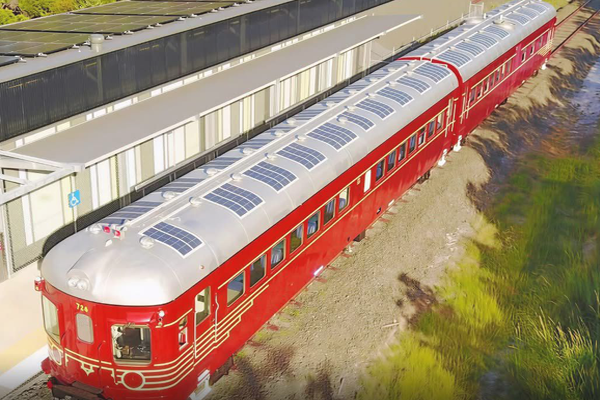
Meadows Foundation Trust Honours Excellence, Service and Human Endeavour

Editorial
The Fragile Peace: Middle East Tensions Persist Despite US-Iran Deal
The announcement of a US-Iran ceasefire agreement, mediated by Pakistan and hailed by President Donald Trump as a major diplomatic breakthrough, offers a glimmer of hope for de-escalation in the Middle East. With the Strait of Hormuz poised to reopen and economic relief potentially on the horizon after months of disruption, the deal marks a significant pause in direct hostilities that have claimed thousands of lives and rattled global energy markets. Yet, as of June 15, 2026, the ground reality in Lebanon underscores a harsh truth: proxy conflicts and deep-seated rivalries do not vanish with ink on paper. Israeli strikes targeting Hezbollah commanders and infrastructure continue, highlighting the precarious nature of regional stability.
Recent incidents exemplify this volatility. Israeli forces conducted precision strikes in Beirut’s southern suburbs (Dahiyeh), a Hezbollah stronghold, killing senior figures including commanders linked to the group’s operations. These actions, framed by Israel as necessary responses to rocket and drone attacks from Lebanese territory, have resulted in civilian casualties and heightened fears of broader escalation. Hezbollah, Iran’s most potent proxy, has rejected elements of the emerging US-Iran framework and vows continued resistance. The cycle of retaliation—strikes met with barrages—persists despite the overarching ceasefire, displacing communities and straining Lebanon’s fragile state institutions.
This disconnect is rooted in structural realities. The US-Iran deal focuses primarily on nuclear concerns, sanctions relief, and maritime access, but it sidesteps the entrenched “Axis of Resistance” dynamics. Iran’s influence through Hezbollah, Houthis, and other militias remains a core security threat for Israel, which insists on degrading these capabilities to protect its northern border. For Tehran, backing allies like Hezbollah is non-negotiable for preserving regional leverage and domestic legitimacy. Israel’s operations in Lebanon, ongoing even amid high-level diplomacy, reflect a doctrine of proactive defense that prioritizes existential security over diplomatic niceties.
The human and economic toll is staggering. Lebanon has endured massive displacement, infrastructure damage, and loss of life exceeding thousands since the 2026 escalations. Global ripple effects—from oil price fluctuations to disrupted trade—underscore how localized violence threatens worldwide recovery. Trump’s calls for restraint from all parties are prudent, yet enforcement remains elusive without broader buy-in, including from Gulf states and European actors.
True peace demands more than bilateral ceasefires. It requires addressing root causes: Hezbollah’s disarmament per UN resolutions, verifiable limits on Iran’s regional proxies, and inclusive dialogues involving Lebanon and Israel. Without these, the US-Iran agreement risks becoming another fragile pause in an endless conflict. Regional powers and international mediators must seize this moment to build inclusive security architectures, lest the next spark reignite wider war. The Middle East—and the world—cannot afford perpetual brinkmanship.
Strengthening the Indo-French Axis: Innovation as the Cornerstone of Strategic Partnership
The joint inauguration of Bharat Innovates 2026 in Nice by Prime Minister Narendra Modi and French President Emmanuel Macron on June 14, 2026, represents far more than a ceremonial event. It symbolizes the maturing of one of the world’s most trusted and forward-looking strategic partnerships. Held as part of the India-France Year of Innovation, this flagship gathering brings together over 120 Indian deep-tech startups, premier institutions like the IITs, and more than 500 global investors and industry leaders across 13 critical sectors—including artificial intelligence, semiconductors, space technology, biotechnology, advanced computing, energy, and healthcare.
In his address, PM Modi underscored India’s transformation from a consumer of technology to a global contributor and problem-solver. He invited investors, universities, and entrepreneurs worldwide to “Design in India, Develop in India, and create solutions for the world.” President Macron, in turn, praised India’s remarkable innovation ecosystem, its production of over a million engineers annually, and landmark achievements such as Chandrayaan-3. He posed a telling question: “The question is no longer whether India innovates, but who will innovate with India?” This mutual recognition reflects growing confidence in India’s capabilities under Modi’s leadership—now the longest-serving Prime Minister since Independence.
Bilateral talks between the two leaders went beyond the event, covering defence, civil nuclear energy, trade, sustainability, security, and people-to-people ties. Discussions reportedly included ambitions to double bilateral trade in the coming years, enhanced cooperation in AI through a dedicated working group, and continued momentum in high-technology collaboration. These align with the broader Special Global Strategic Partnership, which has already delivered tangible outcomes in areas like Rafale jets, submarine projects, and space missions.
In an era of geopolitical uncertainty, supply chain vulnerabilities, and rapid technological disruption, the Indo-French partnership stands out for its emphasis on strategic autonomy and mutual trust. France has consistently supported India’s quest for technology sovereignty, while India offers France a massive market, talented workforce, and a stable democratic partner in the Indo-Pacific. The event in Nice also serves as a powerful platform to showcase Indian startups on the global stage, fostering investments, joint ventures, and co-development that can address planetary challenges—from climate change to healthcare innovation.
As the world navigates the Fourth Industrial Revolution, initiatives like Bharat Innovates 2026 demonstrate how visionary diplomacy can translate into concrete economic and technological gains. For India, this visit reinforces its emergence as a Viksit Bharat hub of innovation. For France and Europe, it provides a reliable bridge to the world’s fastest-growing major economy.
The road ahead demands sustained follow-through: easing regulatory hurdles, protecting intellectual property, and scaling joint R&D. If both nations continue to invest political capital in this relationship, the Nice summit could mark the beginning of a new chapter where Indo-French collaboration not only strengthens bilateral ties but also contributes meaningfully to global stability and progress.
 SAS Kirmani
Most Popular

Speed of light: The cosmic limit that shapes our universe
September 17, 2025
Beats did announce something, after all
September 17, 2025