Meadows Foundation Trust Honours Excellence, Service and Human Endeavour

Editorial
Vijay Divas: A Timeless Tribute to Valor and Victory
On this December 16, 2025, India commemorates the 54th Vijay Divas, marking the resounding triumph of the Indian Armed Forces in the 1971 Indo-Pakistani War. It was on this day in 1971 that Lieutenant General A.A.K. Niazi, commanding 93,000 Pakistani troops, signed the Instrument of Surrender in Dhaka before Lieutenant General Jagjit Singh Aurora. This historic capitulation—the largest since World War II—not only ended a brutal 13-day war but also heralded the birth of Bangladesh, liberating millions from oppression.
The war’s roots lay in humanitarian crisis: Pakistan’s genocidal crackdown on East Pakistan’s Bengali population, displacing over 10 million refugees into India. Under Prime Minister Indira Gandhi’s resolute leadership and Field Marshal Sam Manekshaw’s strategic brilliance, India intervened decisively. The Indian Army, Navy, and Air Force executed flawless operations— from the Navy’s daring strikes on Karachi to the rapid advance into Dhaka alongside the Mukti Bahini.
This victory was not merely military; it was moral. India upheld justice, sheltering refugees and supporting a people’s quest for freedom, reshaping South Asia’s geopolitics.
Today, as wreath-laying ceremonies unfold at the National War Memorial and Vijay Smarak, and events like the Eastern Command’s motorcycle rallies honor the fallen, we salute the 3,900 martyrs and countless heroes. Their sacrifice reminds us of unwavering courage.
Yet, Vijay Divas also prompts reflection. Even after the tense 2025 skirmishes, the spirit of 1971 endures: India’s commitment to peace through strength. As Bangladesh navigates its path, the shared history of liberation binds us.
Vijay Divas is more than remembrance—it’s inspiration. It teaches that righteousness prevails, unity triumphs, and the armed forces remain our eternal shield. Jai Hind!
Geopolitics and Mineral Diplomacy: Securing India’s Critical Future
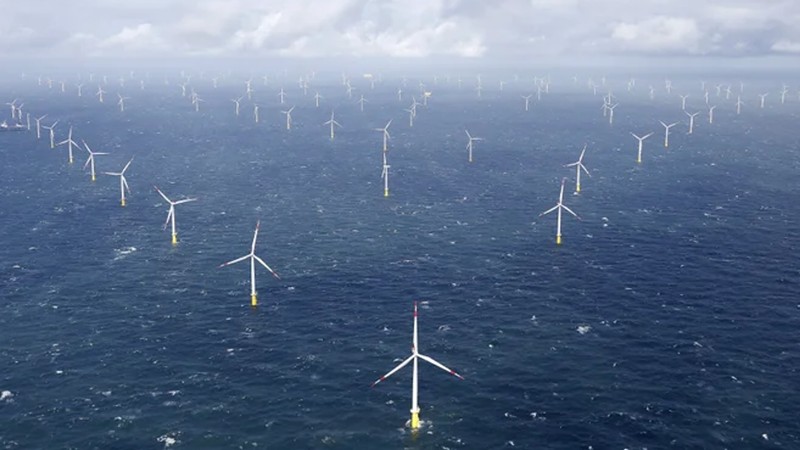
In an era where critical minerals—lithium, cobalt, rare earth elements, nickel, and graphite—power the green energy transition and advanced technologies, India’s vulnerability is stark. With ambitious targets of 500 GW renewable capacity by 2030 and net-zero by 2070, India imports over 90% of these vital resources, heavily reliant on concentrated global supply chains dominated by China.
Recognising this strategic imperative, India has intensified its mineral diplomacy. The National Critical Minerals Mission (NCMM), launched in 2025 with ₹34,300 crore over seven years, emphasises international partnerships alongside domestic exploration. Through Khanij Bidesh India Ltd (KABIL), India has secured lithium blocks in Argentina, cobalt in Australia, and MoUs with the US (2024), UAE, Saudi Arabia, and Japan. Participation in the US-led Minerals Security Partnership (MSP), Quad initiatives, and the new Australia-Canada-India trilateral (ACITI) diversifies sources and promotes resilient chains.
Yet, state-led efforts alone fall short. Greater private sector participation is crucial. Amendments to the Mines and Minerals Act encourage exploration licences and auctions, but incentives like PLI extensions to processing and recycling must expand to attract investment. Private firms bring innovation, capital, and efficiency, vital for value addition—from raw extraction to refined products.
Sustainability remains paramount. India’s strategy must prioritise ESG standards, circular economy practices like e-waste recycling (₹1,500 crore scheme), and low-impact technologies to avoid environmental pitfalls seen elsewhere. Partnerships should embed responsible mining, community benefits, and tech transfer.
As geopolitics intensifies—with resource nationalism in Latin America and US-China rivalries—India’s balanced approach of diplomacy, domestic reforms, private engagement, and sustainability positions it as a global player. Securing critical minerals is not just economic; it’s foundational to technological sovereignty and a green future.
 SAS Kirmani
Most Popular

Speed of light: The cosmic limit that shapes our universe
September 17, 2025
Beats did announce something, after all
September 17, 2025