Meadows Foundation Trust Honours Excellence, Service and Human Endeavour

Editorial
SHANTI Bill 2025: Powering India, Testing Parliamentary Prudence
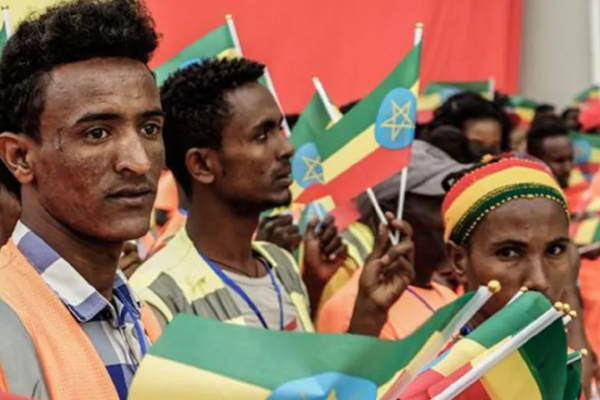
Prime Minister Narendra Modi’s articulation of a new strategic partnership with Ethiopia, alongside key state visit engagements in Muscat and Addis Ababa, reflects a calibrated shift in India’s foreign policy—from transactional diplomacy to development-centred cooperation. The focus on food security, artificial intelligence, digital public infrastructure (DPI), and education signals India’s intent to position itself as a reliable partner for the Global South, offering solutions rather than prescriptions.
Ethiopia occupies a pivotal place in Africa’s political and economic landscape. As the headquarters of the African Union and one of the continent’s fastest-growing economies, it offers India a gateway to deeper African engagement. By prioritising food security, India acknowledges Africa’s most pressing challenge while drawing on its own experience in agricultural productivity, supply-chain management, and cooperative models. Indian expertise in agri-tech, irrigation, and low-cost storage solutions can prove transformative for Ethiopia, especially amid climate stress and demographic pressures.
Equally significant is the emphasis on artificial intelligence and digital public infrastructure. India’s success with platforms such as Aadhaar, UPI, and DigiLocker has demonstrated how technology can be leveraged for inclusion at scale. Offering this model to Ethiopia is not merely technological cooperation; it is an ideological statement that digital transformation need not be monopolised by Western tech giants. It reinforces India’s claim to be a norm-setter in ethical, people-centric digital governance.
Education forms the long-term spine of this partnership. Expanded scholarships, institutional collaborations, and skill-development initiatives aim to create durable people-to-people ties. This approach recognises that strategic partnerships endure not through summits alone, but through shared intellectual and human capital. For Ethiopia, access to India’s educational ecosystem supports capacity-building; for India, it nurtures goodwill and influence across generations.
The Muscat leg of the tour complements this outreach by reinforcing India’s Gulf strategy. Oman has historically served as a bridge between India, West Asia, and Africa. Strengthening ties with Muscat enhances India’s maritime security interests, energy cooperation, and trade routes—critical at a time of geopolitical volatility in the Red Sea and the wider Indian Ocean region.
Together, these engagements underscore a coherent diplomatic vision: India seeks multipolar partnerships grounded in mutual development, not dependency. The challenge now lies in execution. Promises must translate into projects, timelines, and measurable outcomes. If implemented with seriousness, the India–Ethiopia partnership could become a template for South–South cooperation—one that blends technology, human development, and strategic trust in an increasingly fragmented world.
India’s Multi-Alignment Moment: Opportunity, Balance, and Caution
India’s foreign policy today is defined less by alliances and more by alignment management. In an increasingly fragmented world, New Delhi has consciously avoided binary choices, opting instead for a strategy often described as “multi-alignment.” This approach—simultaneously engaging with the United States, Russia, West Asia, Europe, and the Global South—has given India diplomatic flexibility and strategic visibility. The challenge now lies in converting that visibility into sustained influence.
India’s presidency of the G20 marked a high point of this strategy. By foregrounding development, debt relief, climate finance, and the concerns of the Global South, India positioned itself as a bridge between advanced economies and emerging nations. The successful consensus declaration, achieved amid deep geopolitical divisions, demonstrated India’s capacity to convene rather than confront. It reinforced the idea that India can function as a stabilising interlocutor in a polarised world.
At the same time, multi-alignment requires constant calibration. India’s continued engagement with Russia, particularly in energy and defence, reflects historical ties and pragmatic necessity. However, this relationship now operates under global scrutiny due to Russia’s strained relations with the West. India has so far managed this balance by emphasising strategic autonomy—condemning civilian harm while resisting pressure to sever ties. This approach preserves national interest, but it also demands diplomatic agility to prevent reputational costs.
India’s growing engagement with West Asia further illustrates this balancing act. Deepening ties with Israel coexist with sustained relations with Arab states and Iran. Energy security, diaspora welfare, and regional stability remain core concerns. India’s ability to maintain dialogue across rival blocs enhances its strategic relevance, but it also exposes it to regional volatility beyond its control.
The strength of India’s multi-alignment lies in its refusal to be doctrinaire. Yet, flexibility should not become ambiguity. Strategic autonomy is most effective when anchored in clear principles—respect for sovereignty, commitment to international law, and support for multilateral institutions. Without this normative clarity, alignment risks appearing transactional rather than principled.
As global power shifts accelerate, India’s challenge is not choosing sides, but shaping outcomes. Multi-alignment offers space, but leadership requires consistency. Diplomacy cannot substitute for domestic strength, economic resilience, or institutional credibility.
India stands at a moment of opportunity. Whether multi-alignment becomes a lasting strategy or a temporary posture will depend on how confidently India translates balance into purpose—and presence into responsibility.
 SAS Kirmani
Most Popular

Speed of light: The cosmic limit that shapes our universe
September 17, 2025
Beats did announce something, after all
September 17, 2025