Editorial
Nandigram Arrest and the Shadow of Selective Victimisation
The arrest of Congress candidate Milan Pradhan in the Nandigram Assembly bypoll, mere hours after West Bengal Chief Minister Mamata Banerjee publicly extended her support, has once again sharpened the debate over the health of democratic norms in India. The sequence is striking: the Election Commission freezes the Trinamool Congress name and symbol amid a bitter factional fight; the Mamata-led group’s own nominee withdraws; Banerjee then backs the Congress aspirant; and almost immediately, state police take him into custody in connection with an old case. Critics within the INDIA bloc have called it a textbook case of political victimisation. The charge is serious: that power is being used not merely to govern but to eliminate inconvenient challengers.
Nandigram carries heavy historical baggage. It was the site of fierce resistance to land acquisition that once defined Mamata Banerjee’s rise against the Left Front. Today the same soil has become the stage for a different contest—between a fractured Trinamool, a weakened Congress, and the ever-present shadow of the BJP. When the machinery of the state appears to move with such precise timing against a newly anointed rival, the optics of autocracy are hard to ignore. Democracy does not require the absence of arrests; it requires that the timing and targeting of those arrests do not look like an extension of political strategy.
Yet the counter-argument cannot be dismissed lightly. Pending cases do not expire simply because an election approaches. If there is credible evidence in an old matter, the police are duty-bound to act. To demand that every investigation pause during campaign season would itself be a form of selective immunity. The real test is institutional independence: whether the police, the bureaucracy and the courts can demonstrate that the same standards apply regardless of the accused’s political affiliation. When they fail that test—or even appear to fail it—public trust erodes.
What is unfolding in West Bengal is not unique. Across states and parties, the temptation to weaponise investigative agencies remains strong. The result is a politics of perpetual grievance in which every arrest is framed as persecution and every legal process is dismissed as vendetta. This cycle corrodes the distinction between legitimate accountability and political retribution. Citizens are left unsure whether the law is a shield or a sword.
India’s constitutional democracy was designed to restrain precisely this impulse. The remedy lies not in partisan outrage but in the quiet, consistent application of due process—transparent investigations, timely charge sheets, and courts that decide without regard to the political calendar. Until institutions reclaim that neutrality, every high-profile arrest will continue to feed the narrative that the country is sliding toward selective, and therefore autocratic, governance.
Climate Dynamics and the Test of Political Will
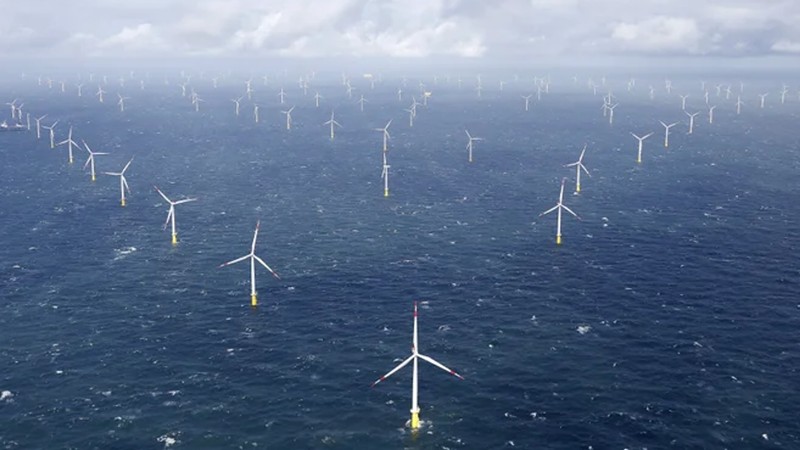
Prime Minister Narendra Modi’s scheduled inauguration of the International Conference on “The Future of Environment and Climate Dynamics” at Vigyan Bhawan marks more than a ceremonial opening. It places India once again at the intersection of science, policy and geopolitics at a moment when the climate system is behaving with increasing unpredictability. Extreme weather, shifting monsoon patterns, and rising energy demands are no longer abstract projections; they are lived realities for millions of Indians. The conference, therefore, arrives with both opportunity and obligation.
Climate dynamics is not merely about rising temperatures. It encompasses the complex interactions between atmosphere, oceans, land and human systems. India’s vulnerability is acute: a large agrarian population, long coastlines, dense urban centres and a development trajectory that still relies heavily on fossil fuels. Recent monsoon shortfalls and the spectre of El Niño have already reminded policymakers that agricultural stability and water security cannot be taken for granted. At the same time, India’s renewable energy expansion and commitments under the Paris Agreement have given it a stronger voice in global climate negotiations. The challenge is to convert that voice into coherent domestic action.
International conferences of this nature can serve two useful purposes. First, they create a platform for scientists, policymakers and practitioners to exchange evidence rather than slogans. Second, they signal political priority. Yet history shows that declarations often outpace delivery. India has announced ambitious targets on renewable capacity, net-zero pathways and green hydrogen. The real test lies in execution: land acquisition for solar parks, grid modernisation, just transition for coal-dependent regions, and the difficult politics of pricing carbon and water. Without these, high-level gatherings risk becoming exercises in optics.
Equity remains the unresolved core of the climate debate. Developing nations rightly insist that historical emitters bear greater responsibility for financing adaptation and technology transfer. Developed countries, meanwhile, press for faster emission cuts from emerging economies. Bridging this divide requires more than rhetoric. It demands transparent accounting, verifiable progress and mechanisms that do not punish growth in the Global South while shielding excess consumption elsewhere.
The conference at Vigyan Bhawan will be judged less by the elegance of its opening address and more by whether it strengthens the link between scientific understanding and policy design. Climate dynamics will not wait for political calendars. The future of the environment will be shaped by decisions taken—or avoided—in the years immediately ahead. Leadership, in this domain, is measured by the willingness to confront inconvenient data and to translate it into durable institutions rather than temporary announcements.
 SAS Kirmani
Most Popular

Speed of light: The cosmic limit that shapes our universe
September 17, 2025
Beats did announce something, after all
September 17, 2025