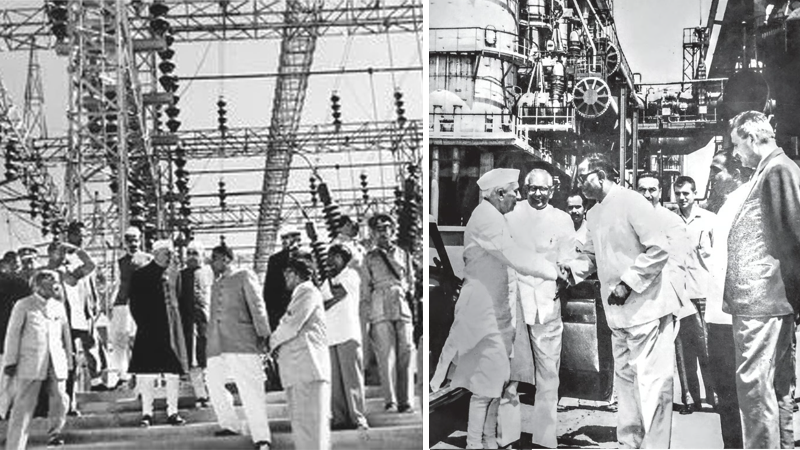
Indira Gandhi: The Iron Lady of India — Hard Work, Farsightedness and an Unyielding Will

Editorial
Navigating Faith in the Digital Census
The quiet revision of the Census 2027 self-enumeration portal’s “Other” religions list offers a revealing glimpse into the complexities of recording religious identity in a diverse democracy. What began as a drop-down menu of nearly 287 options—including ISKCON, Ramakrishna Paramhans, Sanatan, Shia, Sunni, and various tribal faiths—has been pared down to 76 predictive-text suggestions. Most of the remaining entries draw from identities already tabulated in the 2011 Census, particularly those associated with Scheduled Tribe communities such as Sarna, Doni Polo, and Birsa.
The initial expansion raised legitimate concerns. For the first time, the open “Others” category—long treated as a free-text field—appeared to pre-classify numerous sects, spiritual movements, and denominations as distinct religions. Many of these had previously been recorded either as subgroups within the six major religions or as individual write-ins. The sudden appearance of a selectable list risked shaping responses rather than merely recording them, potentially influencing how citizens understood and declared their faith.
Officials later clarified that the entries were intended as predictive-text aids to reduce spelling variations during enumeration. The drop-down format itself, they said, was an unintended technical outcome now under review. The revised portal restores a more restrained approach: suggestions appear only as auto-complete prompts, while respondents retain the freedom to write any identity of their choice.
This episode highlights a deeper tension. India’s census has always balanced the need for standardised data with respect for self-identification. Predictive tools can improve accuracy and consistency, especially in a digital exercise spanning millions of households. Yet any pre-loaded list, however well-intentioned, carries the risk of institutionalising particular identities while sidelining others. The heavy representation of tribal faiths in the final 76 suggestions is welcome recognition of long-standing demands for better enumeration of Adivasi belief systems. At the same time, the removal of numerous other entries underscores how fluid and contested the boundaries of religious classification remain.
As Census 2027 proceeds, transparency will matter as much as technical design. Clear public communication about how responses under “Others” will be tabulated, and how new or rare identities will be treated, can help maintain trust. Religious identity is not merely a statistical category; it is a deeply personal and often political claim. The portal’s adjustment shows responsiveness, but it also serves as a reminder that in a plural society, the tools of enumeration must remain servants of self-expression rather than its architects.
The Politics of Economic Alarm
Leader of the Opposition Rahul Gandhi’s description of India as sitting on an “economic disaster” during a fireside chat at Columbia University has once again sharpened the partisan divide over the country’s growth story. Speaking to students and faculty in New York, Gandhi pointed to massive unemployment, a weakened manufacturing base, and deep-rooted problems in the education system. He argued that the economic model stopped delivering results nearly a decade ago, that schemes such as Make in India and Startup India had failed to rebuild the “spine” of the economy—small and medium enterprises and agriculture—and that services alone cannot absorb India’s vast workforce.
The BJP’s response was swift and categorical. Party leaders accused Gandhi of engaging in “anti-India propaganda” on foreign soil, of deliberately undermining the country’s international image, and of ignoring global recognition of India’s status as one of the world’s fastest-growing major economies. They cited high GDP growth rates, rising per capita income, and poverty reduction figures as evidence that the diagnosis was not merely wrong but motivated by political desperation.
Both positions contain elements that deserve scrutiny rather than reflexive dismissal. Unemployment, particularly among educated youth, remains a persistent challenge. The quality and relevance of education continue to lag behind the aspirations of a young population. Manufacturing’s share of GDP has not expanded as hoped, and the concentration of economic power among a few large conglomerates raises legitimate questions about competition and broad-based opportunity. These are not imaginary problems.
At the same time, painting the entire economy as a “disaster” risks overstatement. India has sustained relatively high growth amid global uncertainty, expanded formal employment in certain sectors, and lifted millions out of extreme poverty. International institutions continue to project it as a key engine of global expansion. The gap between aggregate growth numbers and the lived experience of job-seekers is real, but reducing a complex transition economy to a single catastrophic label does little to illuminate solutions.
The deeper issue is the recurring pattern of economic debate conducted largely through political theatre. When criticism is framed as betrayal and defence is framed as denial, the space for evidence-based discussion shrinks. India needs a serious conversation about job creation, skills, manufacturing competitiveness, and the distribution of growth—not another round of overseas soundbites and domestic counter-attacks. The young people Gandhi claims to speak for will ultimately judge both sides by outcomes, not rhetoric.

 SAS Kirmani
Most Popular

Speed of light: The cosmic limit that shapes our universe
September 17, 2025
Beats did announce something, after all
September 17, 2025