Meadows Foundation Trust Honours Excellence, Service and Human Endeavour

Editorial
Blended Learning: A Digital Leap with Human Responsibility
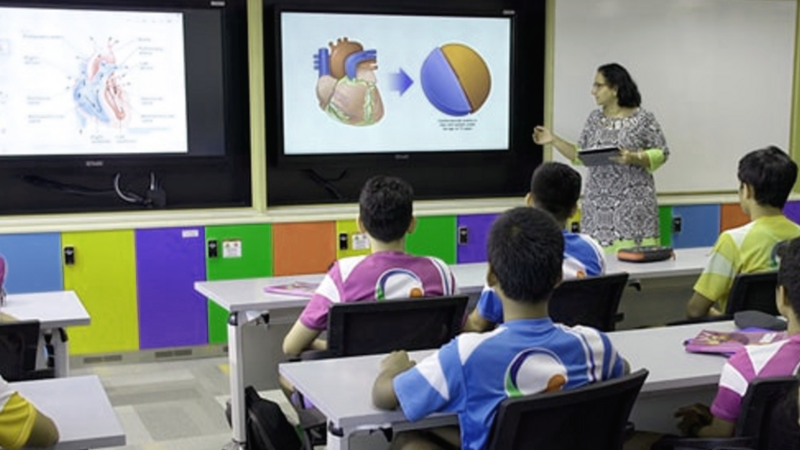
The recent initiative by the Delhi Government to introduce blended learning in schools marks a significant shift in India’s educational landscape. By integrating traditional classroom teaching with digital innovation and 3D simulation-based content, the policy reflects a forward-looking vision aligned with the needs of a rapidly evolving world.
At its core, blended learning promises flexibility. Students are no longer confined to the physical classroom; learning extends beyond school walls through mobile apps and web platforms. This continuity—especially in times of disruption such as pandemics or local constraints—ensures that education remains uninterrupted. The inclusion of curriculum-aligned digital content mapped to NCERT standards also indicates an effort to maintain academic consistency and quality.
One of the most commendable aspects is the emphasis on interactive and experiential learning. The use of 3D simulations, particularly in subjects like Mathematics and Science, can transform abstract concepts into tangible experiences. When combined with Interactive Flat Panels (IFPs), this approach has the potential to make classrooms more engaging and inclusive, catering to diverse learning styles.
However, the success of this ambitious plan will depend on execution. Digital infrastructure remains uneven across schools, and the promise of accessibility in “low or no-connectivity environments” must be rigorously tested. Without reliable devices, internet access, and technical support, the initiative risks widening the digital divide rather than bridging it.
Equally important is teacher preparedness. Technology, no matter how advanced, cannot replace the role of a teacher. Instead, it must empower educators. This requires extensive training programs to help teachers adapt to new tools, design blended lesson plans, and effectively monitor student progress through digital platforms.
The introduction of a comprehensive formative assessment system is another progressive step. By enabling continuous evaluation at multiple levels—from individual learners to districts—it moves away from rote-based, high-stakes examinations towards a more holistic understanding of student performance.
Yet, caution must be exercised. Over-reliance on digital platforms may inadvertently reduce human interaction, which is essential for emotional and social development. Education is not merely the transfer of information; it is the cultivation of values, empathy, and critical thinking.
In conclusion, the Delhi government’s blended learning initiative is a bold and necessary reform. If implemented with careful attention to equity, teacher training, and infrastructure, it could become a model for the rest of the country. The challenge lies not in adopting technology, but in harmonizing it with the human essence of education.
President Donald Trump Intervention to halt further Israeli Strikes on Iran
President Donald Trump’s reported intervention to halt further Israeli strikes on Iran’s South Pars gas field, coupled with his stark threat of massive U.S. retaliation if Iran continues attacks on Gulf energy assets, reveals the chaotic and contradictory nature of America’s entanglement in the ongoing war with Iran.
In recent days, Israel—acting unilaterally, according to Trump—struck Iran’s massive South Pars facility, the world’s largest natural gas field shared with Qatar. This provoked Iranian missile retaliation against Qatari LNG sites, escalating fears of a broader energy war that could cripple global supplies. Trump swiftly distanced the U.S. from the Israeli action, claiming no prior knowledge, and declared on Truth Social that “NO MORE ATTACKS WILL BE MADE BY ISRAEL” on the field unless Iran targets Qatar again. He warned that any such Iranian move would trigger the U.S. to “massively blow up the entirety of the South Pars Gas Field” with unprecedented force.
This episode exposes deep tensions in the U.S.-Israel alliance amid a conflict Trump helped ignite. The war began in late February 2026 with joint U.S.-Israeli strikes aimed at dismantling Iran’s nuclear and missile programs, destroying its navy, and even encouraging regime change after the killing of Supreme Leader Ali Khamenei. Yet Trump’s public rebuke of Israel’s energy strike and his order to stand down suggest limits to U.S. tolerance for escalation—particularly when it risks alienating Gulf allies like Qatar, host to America’s largest regional military base, or spiking oil prices further.
Trump’s approach blends de-escalatory restraint with apocalyptic threats, a hallmark of his foreign policy style. By intervening to curb Israel, he signals awareness that unchecked strikes on critical infrastructure could spiral into a wider catastrophe, disrupting global energy markets and drawing in reluctant allies. His threat against Iran, however, underscores a willingness to escalate dramatically if provoked, prioritizing protection of Gulf energy over broader restraint.
Critics argue this reflects strategic incoherence: Trump launched a regime-change war promising quick victory, yet now pleads for limits while threatening annihilation. The intervention buys time but doesn’t resolve the core dilemma—how to end a conflict that has already caused thousands of deaths, massive civilian suffering, and economic turmoil without appearing weak to domestic hawks or Israel’s hardliners.
Ultimately, Trump’s move highlights the perils of proxy dynamics in a direct war. Israel pushes aggressive action against Iran; Trump, bearing the global fallout, pulls back selectively while brandishing the bigger stick. Whether this prevents catastrophe or merely delays it remains uncertain. In a region scarred by miscalculation, calibrated threats may be the only tool left, but they risk proving as inflammatory as the strikes they seek to stop.
 SAS Kirmani
Most Popular
Speed of light: The cosmic limit that shapes our universe
September 17, 2025
Beats did announce something, after all
September 17, 2025