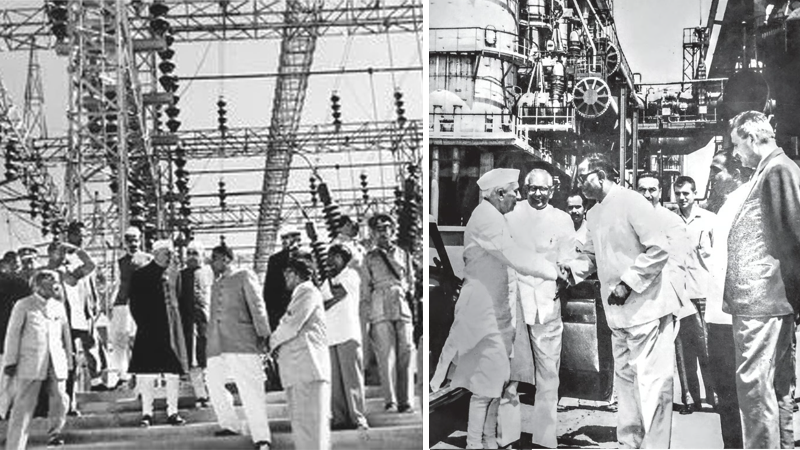
Meadows Foundation Trust Honours Excellence, Service and Human Endeavour

Editorial
India condemns Pakistan’s airstrikes on Afghan territory
The recent Pakistani airstrikes on Afghan territory, conducted overnight on February 22, 2026, represent yet another regrettable escalation in the volatile dynamics along the Durand Line. Targeting what Islamabad described as seven “camps and hideouts” belonging to the Tehreek-e-Taliban Pakistan (TTP) and affiliated groups, including elements linked to the Islamic State–Khorasan Province, the operation was framed by Pakistan’s military and information ministry as an “intelligence-based, selective” response to a surge in cross-border terrorism. This includes deadly suicide bombings in Pakistan, such as the attack on a Shia mosque in Islamabad earlier this month that claimed dozens of lives amid the holy month of Ramadan.
Pakistan’s claims of neutralizing over 70 militants underscore its long-standing grievance: that Afghan soil has become a safe haven for groups launching attacks into its territory. The TTP, an offshoot ideologically aligned with but distinct from the Afghan Taliban, has intensified operations in recent years, exploiting porous borders and alleged sanctuaries. Islamabad’s frustration is understandable—internal security challenges have exacted a heavy toll on Pakistani civilians and forces, and successive governments have demanded that Kabul dismantle these networks under agreements like those mediated in Doha.
Yet India’s strong condemnation, issued promptly by the Ministry of External Affairs spokesperson, highlights a critical dimension often overlooked in this bilateral feud: the human cost and violation of sovereignty. The strikes reportedly struck civilian areas in Nangarhar and Paktika provinces, including homes and a religious seminary (madrasa), resulting in at least 18 deaths—among them women and children—according to Afghan sources, with dozens more injured or missing. Afghanistan’s defense ministry and Taliban officials have decried the attacks as deliberate targeting of innocents during Ramadan, vowing an “appropriate response.” Such collateral damage not only inflames local sentiments but risks broader regional instability, potentially drawing in other actors or exacerbating humanitarian crises in an already fragile Afghanistan.
New Delhi’s statement goes beyond mere sympathy for Afghan civilians. It explicitly denounces the strikes as an attempt by Pakistan to “externalise its internal failures.” This pointed critique reflects India’s consistent position: Pakistan has historically used terrorism as an instrument of state policy, particularly against India, and now appears to project its domestic militant challenges outward through military adventurism. By violating Afghan territorial integrity, Islamabad undermines the very principles of non-interference and peaceful resolution it demands from others. India’s reaffirmation of support for Afghanistan’s sovereignty and territorial integrity is timely, signaling solidarity with Kabul while cautioning against cycles of retaliation that could spiral into wider conflict.
The international community must urge restraint. While counter-terrorism is a legitimate concern, cross-border strikes—especially those causing civilian casualties—erode trust and complicate diplomacy. Pakistan should pursue verifiable evidence-sharing and joint mechanisms rather than unilateral force. Afghanistan, in turn, must address credible concerns about militant safe havens. Regional powers like India, which has long advocated dialogue and reconstruction in Afghanistan, can play a constructive role in de-escalation.
Ultimately, sustainable peace demands accountability on all sides. The airstrikes serve as a stark reminder that unresolved grievances and porous borders fuel endless violence, claiming innocent lives in the process. Breaking this cycle requires mutual respect for sovereignty, genuine counter-terrorism cooperation, and a commitment to protect civilians—principles that must prevail over short-term military expediency.
US President Trump raises global tariffs to 15%
President Donald Trump’s swift decision to hike a new global tariff on imports to 15%—from the 10% he imposed just a day earlier—marks a defiant escalation in his trade agenda, coming mere hours after the U.S. Supreme Court delivered a sharp rebuke on February 20, 2026. In a 6-3 ruling in Learning Resources, Inc. v. Trump, the Court held that the International Emergency Economic Powers Act (IEEPA) does not authorize the president to unilaterally impose tariffs, invalidating sweeping levies Trump had enacted over the past year to address trade deficits, drug trafficking, and perceived national security threats. The decision, which could trigger refunds of billions in collected duties, represented a rare judicial check on executive overreach.
Undeterred, Trump invoked Section 122 of the Trade Act of 1974—a rarely used provision allowing temporary tariffs up to 15% to remedy balance-of-payments issues—and announced the initial 10% blanket duty on imports from virtually all countries, effective February 24 for 150 days. By Saturday, he raised it to the statutory maximum of 15%, framing the move as necessary to protect American workers and counter nations “ripping off” the U.S. for decades. This uniform application sidesteps targeted exemptions or negotiations, applying broadly even to allies, though it remains temporary and subject to potential extensions or replacements via other authorities like Section 301 investigations.
The economic fallout is immediate and uncertain, particularly for export-dependent Asian economies. For major players like China, India, and Brazil—previously facing higher, country-specific tariffs under the now-invalidated regime—the shift to a flat 15% represents a relative reduction in some cases, but still sustains significant pressure. Analysts note that while average effective U.S. tariffs may drop from peaks around 15-18% for these nations to around 14-15%, the blanket nature disrupts supply chains, raises input costs, and fuels inflation risks. Indian exporters, already navigating U.S. scrutiny on sectors like pharmaceuticals and textiles, face renewed headwinds; Chinese manufacturers contend with layered uncertainties amid ongoing tech and trade tensions; Brazil, hit hard by prior steel and commodity levies, sees mixed relief but persistent export challenges.
Critics argue Trump’s approach risks igniting a broader trade war, inviting retaliation that could harm U.S. consumers through higher prices and exporters through lost markets. The temporary window—150 days—invites speculation: will Congress intervene, or will further probes under existing laws lead to permanent, targeted hikes? Supporters hail it as bold reciprocity, forcing fairer trade terms and revitalizing domestic manufacturing.
Yet this brinkmanship undermines global stability at a fragile moment. Multilateral frameworks like the WTO, already strained, face erosion as unilateral actions proliferate. For emerging economies in Asia and Latin America, the volatility deters investment and complicates recovery. Sustainable trade policy demands negotiation, not escalation. Trump’s tariff gambit, while politically resonant at home, may ultimately prove self-defeating—raising costs for Americans, alienating partners, and inviting countermeasures that deepen divisions rather than resolve imbalances. True economic security lies in rules-based cooperation, not perpetual confrontation.

 SAS Kirmani
Most Popular

Speed of light: The cosmic limit that shapes our universe
September 17, 2025
Beats did announce something, after all
September 17, 2025