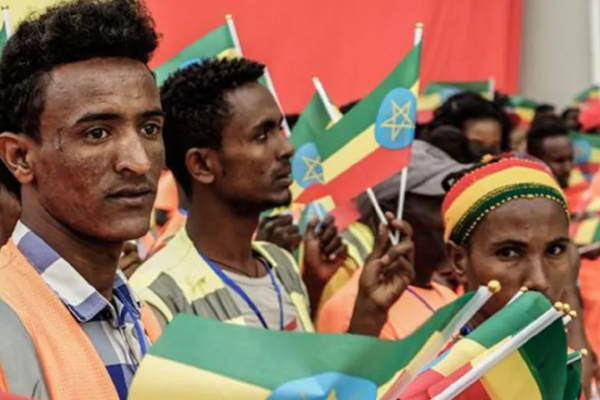
Meadows Foundation Trust Honours Excellence, Service and Human Endeavour

Editorial
The UN Commission’s Gaza Report: A Call for Scrutiny, Not Simplification
The Independent International Commission of Inquiry’s latest report, released June 23, 2026, accuses Israeli authorities and security forces of deliberately targeting Palestinian children in Gaza, framing these actions as evidence of ongoing genocide, crimes against humanity, and war crimes. It highlights approximately 30% of Gaza deaths as children, with killings allegedly continuing after the October 2025 ceasefire, alongside harms in the West Bank.
This is a grave charge under the 1948 Genocide Convention. Any credible evidence of intentional harm to civilians, especially children, demands rigorous investigation and accountability. The scale of destruction in Gaza—tens of thousands dead, widespread injury, collapsed infrastructure, and humanitarian crisis—is undeniable and heartbreaking. Families on both sides have endured unimaginable loss.
Yet editorials must confront uncomfortable context. The war began with Hamas’s October 7, 2023, massacre: deliberate slaughter of civilians, including children, sexual violence, and hostage-taking. Hamas embeds military assets in civilian areas—schools, hospitals, dense urban zones—using populations as shields, a clear war crime. Israel’s operations target Hamas leadership, tunnels, and rocket sites, not civilians per se. High civilian casualties in such warfare often result from this asymmetry, not necessarily genocidal intent. Post-ceasefire incidents require separate verification.
UN commissions have faced repeated criticism for institutional bias against Israel: selective mandates, reliance on contested sources, and underplaying Hamas atrocities or Palestinian rejectionism. Previous reports set precedents that Israel dismisses as “scandalous” or politically motivated. Independent forensic analysis, transparent data (including from IDF investigations), and cross-verification with multiple actors are essential before labeling a democratic state with genocidal intent.
Ongoing Lebanon border tensions compound the tragedy. Israeli strikes and Hezbollah exchanges persist despite fragile ceasefires, risking wider escalation involving Iran and beyond. Children suffer on all sides—Israeli communities under rocket fire, Lebanese villages caught in crossfire.
Moral clarity requires rejecting collective punishment while recognizing Israel’s right to self-defense against existential threats. True justice involves prosecuting specific war crimes wherever proven—Hamas’s deliberate barbarism and any Israeli excesses—through impartial mechanisms, not politicized UN bodies. Humanitarian corridors, hostage release, and deradicalization must be priorities.
This conflict’s cycle of violence will end not through accusatory reports alone, but via negotiated security arrangements, governance reform in Gaza, and regional normalization that isolates rejectionists. Both peoples deserve peace and prosperity. Inflammatory rhetoric risks entrenching hatred; evidence-based accountability and pragmatic diplomacy offer a path forward.
The Fractured Opposition: INDIA Bloc’s Enduring Challenges
The INDIA bloc, forged in 2023 as a broad platform to challenge the BJP’s dominance, continues to grapple with internal fissures even as it attempts resets. Recent developments underscore persistent alliance strains: the DMK’s decision to skip the June 8, 2026, meeting in Delhi marks a significant blow, driven by accusations of Congress “betrayal” in Tamil Nadu. Following electoral setbacks for the DMK-led alliance in the state assembly polls, Congress extended support to actor-turned-politician Vijay’s Tamilaga Vettri Kazhagam (TVK), prompting deep resentment among DMK cadres and leadership. Senior DMK figures, including TKS Elangovan, have declared the party is no longer part of the bloc, at least in its current form with Congress.
This is more than a regional spat. The DMK was a foundational southern pillar of the opposition alliance. Its distancing, alongside AAP’s public aloofness and turbulence within TMC ranks after electoral reverses in West Bengal, highlights structural vulnerabilities. The bloc was born of necessity — a coalition of convenience among parties with divergent ideologies, regional priorities, and egos. Post-2024 Lok Sabha results, where the opposition performed better than expected but still fell short of dislodging the NDA, and subsequent state polls have exposed these fault lines further. Unity efforts persist: recent huddles have focused on coordinated strategies against the government on issues like inflation, unemployment, and institutional concerns. Yet, seat-sharing disputes, post-poll realignments, and mutual suspicions repeatedly undermine momentum.
Critics rightly point out that anti-BJPism alone cannot substitute for a coherent vision or organisational discipline. Regional parties like DMK prioritise local dominance and are wary of Congress’s attempts to reclaim space in their strongholds. Congress, in turn, faces accusations of opportunism. This cycle of distrust risks rendering the opposition ineffective against a BJP that, despite its own challenges, maintains a formidable national machinery and narrative.
However, democracy thrives on robust opposition. Fragmentation weakens parliamentary scrutiny and allows majoritarianism to go unchecked. The INDIA bloc’s survival depends on pragmatic compromises: respecting federal sensitivities, evolving beyond personality-driven politics, and articulating an alternative governance model that addresses India’s aspirations — jobs, equity, and development without divisiveness.
As parties eye 2029, the real test is whether they can convert public discontent into credible alternatives. Boycotts and walkouts may score immediate points but ultimately empower the incumbent. Opposition leaders must choose: perpetual acrimony or mature realignment that puts national interest above narrow calculations. India deserves a constructive, united opposition capable of holding power accountable, not one perpetually mired in its own contradictions.
 SAS Kirmani
Most Popular

Speed of light: The cosmic limit that shapes our universe
September 17, 2025
Beats did announce something, after all
September 17, 2025