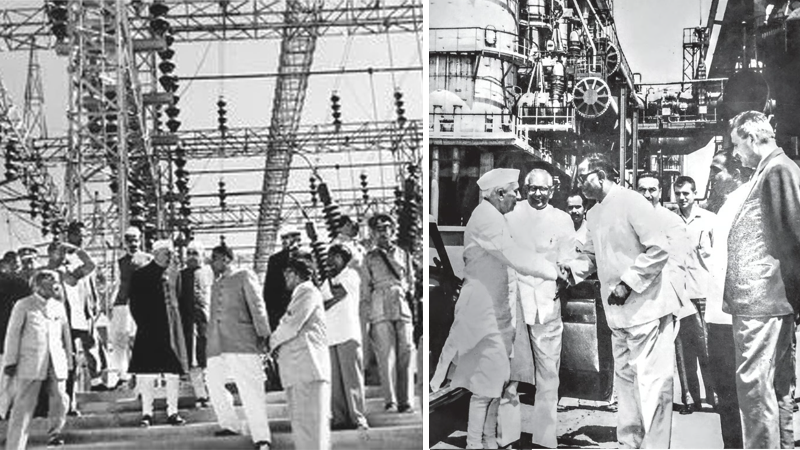
Indira Gandhi: The Iron Lady of India — Hard Work, Farsightedness and an Unyielding Will

Editorial
Calm on the Eastern Front: The Imperative of Sustained Dialogue
The recent conclusion of nearly ten days of Corps Commander-level talks between India and China in Arunachal Pradesh marks a quiet but significant step in managing the complex realities of the Line of Actual Control. Beginning shortly after Deepavali on November 8 and extending with a brief interlude, these discussions—led by Lieutenant General Girish Kalia, General Officer Commanding of the Indian Army’s III Corps, alongside his Chinese counterpart and an MEA official—focused on practical measures: engagement protocols, prevention of face-offs, open communication channels, and reduction of friction before the onset of harsh winter.
This second round follows the first Corps Commander meeting held on September 6-7 at the Wacha-Damai Border Personnel Meeting point in the Kibithoo sector. Both sides have deployed substantial forces along the approximately 1,140-km stretch of the LAC in Arunachal. Local reports of earlier tensions, particularly in areas such as Taksing in Upper Subansiri, had raised concerns. In this context, the talks represent a deliberate effort to institutionalise mechanisms that prevent local incidents from escalating into larger confrontations—especially when winter will restrict movement, logistics, and rapid response.
The absence of official joint statements is typical of such sensitive military-diplomatic engagements. Yet the reported cordiality and the focus on ground-level protocols suggest a shared recognition that sustained friction serves neither side. India’s approach has consistently combined firmness in defending territorial integrity with a willingness to engage in structured dialogue. China’s participation indicates an interest in stabilising the eastern sector even as broader boundary questions remain unresolved.
However, talks alone are insufficient. The real test lies in implementation. Any delay in operationalising agreed measures risks complications once temperatures drop and access to forward areas becomes constrained. Both armies must translate protocols into consistent behaviour on the ground—restraining patrols where necessary, maintaining hotlines, and avoiding provocative infrastructure or troop movements that could undermine trust.
These military-level engagements form part of a wider architecture that includes Special Representatives’ talks and other diplomatic channels. Progress in Arunachal does not resolve the larger boundary dispute, nor does it erase the memory of past confrontations. Yet it demonstrates that pragmatic, sector-specific management remains possible. In an era of strategic competition, the ability of two nuclear-armed neighbours to keep their contested frontier stable is itself a contribution to regional peace.
India must continue investing in border infrastructure, surveillance, and rapid mobilisation capabilities while keeping the door open for dialogue. China, for its part, would do well to match words with verifiable restraint. The snow will soon cover the high passes. Whether it blankets simmering tensions or freezes them into a more durable calm depends on how seriously both sides treat the understandings reached in these recent talks.
A Landmark Verdict, and the Test of Will
On 19 November 2026, the International Court of Justice delivered a judgment of historic weight. By nine votes to six, the Court found that Myanmar committed genocide against the Rohingya in northern Rakhine State during the 2017 “clearance operations.” For the first time in its history, the ICJ held a state responsible for the crime of genocide. The finding rests on clear evidence of mass killings, widespread sexual violence, extreme violence against children, and measures intended to prevent births—acts carried out with the specific intent to destroy a substantial part of the protected group.
The Court further ruled that Myanmar failed in its obligations to prevent genocide by others acting alongside its forces, to punish perpetrators, and to enact necessary legislation. It also determined that Myanmar violated the Court’s earlier provisional measures order by failing to preserve evidence. These conclusions, reached after years of careful examination of the case brought by The Gambia, leave little room for denial.
The United Kingdom’s response has been prompt and purposeful. Foreign Secretary Ed Miliband announced formal recognition of the genocide, the expulsion of Myanmar’s defence attaché, and new sanctions against five senior military officers. Plans for legislation to restrict aviation fuel supplies—used in airstrikes against civilians—and additional humanitarian support for survivors signal a determination to move beyond words. A call for urgent discussion at the UN Security Council is equally necessary.
Yet a judicial finding, however authoritative, is not self-executing. The Court has ordered Myanmar to prevent further violations, investigate and punish those responsible, facilitate the safe and dignified return of the displaced, and provide restitution and compensation. Compliance cannot be assumed from a military regime that has shown little regard for international law. The real test will be whether the international community sustains pressure—through coordinated sanctions, diplomatic isolation, support for accountability mechanisms, and sustained assistance to the more than one million Rohingya still living in exile, primarily in Bangladesh.
The ruling also carries wider significance. It reaffirms that the Genocide Convention remains a living instrument and that states can be held to account for the gravest crimes. At a time when the language of genocide is often contested and instrumentalised, the Court’s careful reasoning and high evidentiary threshold offer a model of judicial restraint and clarity.
Justice delayed is not always justice denied, but it is incomplete without consequences. The ICJ has spoken with moral and legal authority. Governments that claim to uphold the international rules-based order must now ensure that this landmark judgment is matched by consistent, collective action. The Rohingya have waited long enough.
 SAS Kirmani
Most Popular

Speed of light: The cosmic limit that shapes our universe
September 17, 2025
Beats did announce something, after all
September 17, 2025