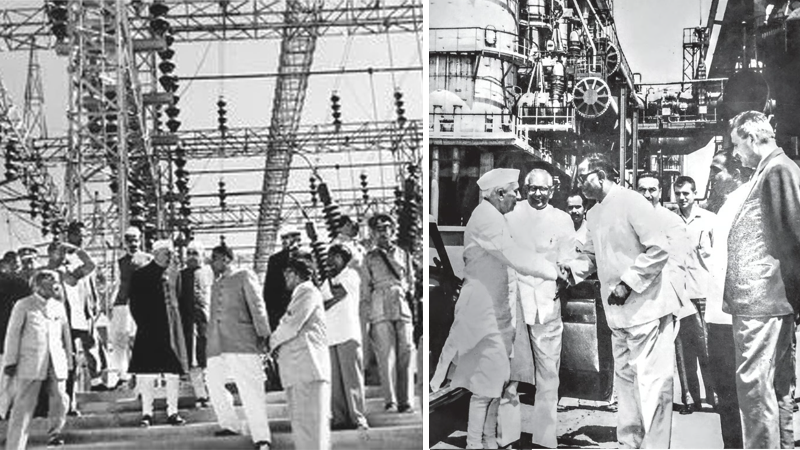
Indira Gandhi: The Iron Lady of India — Hard Work, Farsightedness and an Unyielding Will

Editorial
Special Parliament Sitting on Delimitation and Women’s Quota: A Political Test of Numbers
The decision to reconvene Parliament for a short special sitting from November 30 — Lok Sabha on the 30th and Rajya Sabha on December 2 — marks a determined second attempt by the government to operationalise 33 per cent reservation for women in the Lok Sabha and state assemblies. Linked to a delimitation exercise that would raise the maximum strength of the Lower House from 543 to around 850 seats, the proposed Constitution amendment seeks to give effect to the Nari Shakti Vandan Adhiniyam before the 2029 general elections.
This is no ordinary legislative exercise. Women’s representation in Indian legislatures has remained stubbornly low for decades despite political promises across party lines. Linking the quota to an expanded House through delimitation is presented by the government as a practical way to create space for women without displacing existing male legislators. A proportionate increase in seats across states is being considered to address long-standing concerns of southern and smaller states that fear relative loss of influence under a purely population-based redrawing of boundaries.
Yet the path is fraught. In April this year, a similar Bill fell short of the required two-thirds majority in the Lok Sabha. The Opposition, while supporting the principle of women’s reservation, has consistently demanded that it be implemented within the existing 543 seats and delinked from any delimitation that alters the current inter-state balance of power. Southern parties, in particular, view any population-driven expansion as a potential penalty for their success in controlling population growth and delivering better human development outcomes.
The government’s procedural ingenuity — keeping the Monsoon Session technically alive rather than proroguing it — has allowed a rapid reconvening. Critics call this a “mockery of democracy.” Supporters see it as legitimate urgency to deliver long-pending justice to half the population. The numbers game remains delicate. Support from parties such as the DMK and NCP (SP) could prove decisive.
What is ultimately at stake is larger than arithmetic. A successful passage would represent one of the most significant expansions of democratic representation since Independence. Failure, or a bitterly contested passage without broader consensus, risks deepening regional mistrust and reducing a transformative social measure to another partisan battleground.
Parliament now has an opportunity to rise above political point-scoring. Women’s reservation is too important to be held hostage either to procedural manoeuvres or to fears of federal imbalance. A carefully crafted formula that expands the House while protecting the relative strength of states, combined with a clear timeline and safeguards, can still command the moral and political majority the issue deserves. The coming days will reveal whether India’s political class is ready to prioritise empowerment over electoral calculus.
US Tariff Proposal on India: Pressure Tactic or Path to a Deal?
The United States Trade Representative’s proposal of tariffs of up to 25 per cent on Indian goods marks another sharp turn in the long and often turbulent India-US trade relationship. Citing “unreasonable acts, policies and practices” that allegedly create structural excess manufacturing capacity and restrict American commerce, Washington has placed India among 14 economies facing fresh Section 301 action. The proposed rate is the second-highest after Vietnam’s 35 per cent. Crucially, the USTR has indicated that the duty could fall to 17 per cent if New Delhi and Washington conclude a reciprocal trade agreement that addresses the concerns raised in the investigation.
India has responded firmly. The Commerce Ministry has rejected the charge of structural excess capacity, stating clearly that the country has none in any sector. It has reiterated that any trade-related issues should be resolved within the framework of the ongoing bilateral trade negotiations rather than through unilateral tariff threats. New Delhi has also underlined its continued commitment to an early conclusion of the India-US Bilateral Trade Agreement.
The proposal arrives at a sensitive moment. The United States remains India’s largest export market. A steep tariff hike, even if not immediately enforced, introduces uncertainty for exporters in pharmaceuticals, steel, solar, information technology and other labour-intensive sectors. For Washington, the move is consistent with a broader strategy of using tariffs as leverage to force trading partners to open markets and curb what it views as unfair industrial policies. For India, it risks being seen as an attempt to extract concessions under pressure rather than through mutual negotiation.
Both sides have incentives to avoid a prolonged confrontation. A stable, predictable trade framework would benefit American companies seeking greater access to the Indian market and Indian exporters dependent on the US. The 17 per cent rate offered in exchange for a deal is being framed by some as a competitive edge over several Southeast Asian peers. Yet any agreement must be balanced. India cannot afford to compromise core interests in agriculture, data, or sensitive manufacturing merely to secure a lower tariff.
The coming weeks of public comment and further talks will test whether this tariff proposal becomes a genuine catalyst for a fair deal or another episode of transactional pressure. Diplomacy, not escalation, remains the wiser course for two strategic partners whose economic relationship is too important to be held hostage to periodic trade skirmishes.
 SAS Kirmani
Most Popular

Speed of light: The cosmic limit that shapes our universe
September 17, 2025
Beats did announce something, after all
September 17, 2025