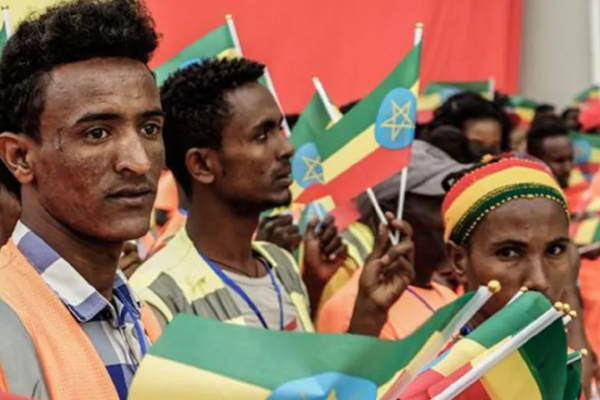
Meadows Foundation Trust Honours Excellence, Service and Human Endeavour

Editorial
West Bengal’s Supplementary Voter List: Transparency or Tactical Timing?
The recent decision of the Election Commission of India to publish a second supplementary voter list in West Bengal ahead of the upcoming elections has reignited an old and uncomfortable debate: are electoral processes in India truly insulated from suspicion, or do such last-minute revisions risk eroding public trust?
At one level, the exercise appears routine. Electoral roll revisions are a statutory responsibility, intended to ensure that every eligible citizen can vote while eliminating duplications and inaccuracies. In a vibrant democracy like India, this is not just administrative housekeeping—it is foundational to legitimacy. However, the timing and frequency of such supplementary lists, especially in politically charged states like West Bengal, raise legitimate concerns.
The publication of a second supplementary list so close to elections invites scrutiny. Opposition parties have already begun questioning whether these revisions disproportionately benefit certain political interests. Allegations of selective inclusion or exclusion—whether substantiated or not—can quickly undermine confidence in the electoral machinery. Even the perception of bias is damaging. The Election Commission of India, as a constitutional body, must not only act impartially but also be seen to do so beyond any doubt.
West Bengal’s electoral landscape has long been marked by intense political rivalry and allegations of voter manipulation. In such an environment, any deviation from predictable and transparent procedures becomes fertile ground for controversy. The Commission’s silence on detailed justifications for the timing of this second list only adds to the opacity. Why was a single comprehensive revision not sufficient? What triggered the need for a second supplementary update at this juncture?
Moreover, voter awareness remains a concern. Frequent revisions risk confusing citizens, particularly in rural and marginalized communities, who may find it difficult to verify their names repeatedly. The possibility of disenfranchisement—intentional or accidental—cannot be dismissed lightly. Democracy suffers not only when votes are manipulated, but also when voters are discouraged or excluded.
To be fair, the Commission operates under logistical constraints and legal mandates that often require continuous updating of rolls. Yet, the burden of proof lies with the institution to demonstrate that its actions are guided solely by fairness and necessity, not expediency.
In the final analysis, electoral credibility is India’s democratic backbone. The Election Commission of India must go beyond procedural correctness and embrace radical transparency—clear explanations, public consultations, and robust grievance redressal mechanisms. Only then can it ensure that electoral roll revisions strengthen democracy rather than cast shadows over it.
Indian Premier League 2026 begins in Chinnaswamy Stadium Bengaluru
As the floodlights illuminate the M. Chinnaswamy Stadium in Bengaluru this evening, the Indian Premier League 2026 kicks off with a marquee clash between defending champions Royal Challengers Bengaluru and Sunrisers Hyderabad. The electric atmosphere, packed stands, and roar of fans signal the return of cricket’s biggest domestic spectacle. Yet, even before the first ball is bowled, a sour note has emerged from the corridors of the Karnataka Legislative Assembly: elected representatives demanding premium VIP tickets as their due, with some insisting they are “VIPs who cannot stand in queues.”
This episode, unfortunately, is not isolated. Across party lines — Congress and BJP MLAs alike — lawmakers have voiced outrage that the Karnataka State Cricket Association (KSCA) did not automatically allocate four (or even five) premium tickets per legislator, complete with lounge access and preferential treatment. The Speaker of the Assembly directed the government to intervene, and Deputy Chief Minister DK Shivakumar, himself associated with cricket administration, stepped in to facilitate the arrangement. Reports suggest the KSCA has partially yielded, offering two VIP tickets for today’s opener and more for subsequent matches.
At one level, the demand reflects an old Indian political reflex: the assumption that public representatives deserve special privileges simply by virtue of their office. MLAs argue that the stadium sits on government-allotted land and that the state provides security and infrastructure support for mega events. They also point to alleged black-marketing, with tickets originally priced around ₹5,000 reportedly changing hands for far higher sums. In their view, elected members should not have to scramble like ordinary citizens.
Yet this reasoning collapses under scrutiny. IPL matches are commercial entertainments organised by a private league under the BCCI umbrella, not state-sponsored public functions. Tickets are sold to generate revenue for players, franchises, and the ecosystem that sustains cricket. Genuine fans — students saving pocket money, middle-class families budgeting for a rare outing, or loyal RCB supporters enduring years of heartbreak — queue, compete, and often pay premium prices out of passion. When MLAs demand complimentary premium seats as an entitlement, they effectively ask ordinary taxpayers and cricket lovers to subsidise their entertainment. It sends a troubling message: public service confers not responsibility but perks.
The optics are particularly poor in Bengaluru, a city still healing from the tragic stampede during last year’s victory celebrations that claimed lives. Safety protocols, crowd management, and equitable access should be priorities, not the creation of exclusive enclaves for politicians. Moreover, with allegations of black-marketing swirling, the focus should be on transparent ticketing systems, digital verification, and cracking down on touts — not on carving out VIP quotas that further distort supply.
This episode highlights a deeper malaise in India’s political culture: the persistent conflation of elected office with personal privilege. True public representatives earn respect through governance — improving stadium infrastructure, ensuring affordable sports access for youth, or strengthening grassroots cricket — not by elbowing their way into the best seats. Cricket, more than any other sport in India, thrives on its democratic appeal. From maidans to international arenas, it unites across class and region precisely because merit and passion, not status, decide who gets to savour the contest up close.
As RCB begins its title defence and SRH unleashes its explosive batting, the spectacle on the field will hopefully overshadow the unseemly jostling off it. For the IPL to retain its magic, administrators, franchises, and governments must resist the VIP culture that undermines the spirit of fair play. Fans, after all, are the real stakeholders. They deserve priority over those who already enjoy the privilege of shaping policy and public life. Let the bat and ball decide the evening’s heroes — not the demand for free passes.
 SAS Kirmani
Most Popular

Speed of light: The cosmic limit that shapes our universe
September 17, 2025
Beats did announce something, after all
September 17, 2025