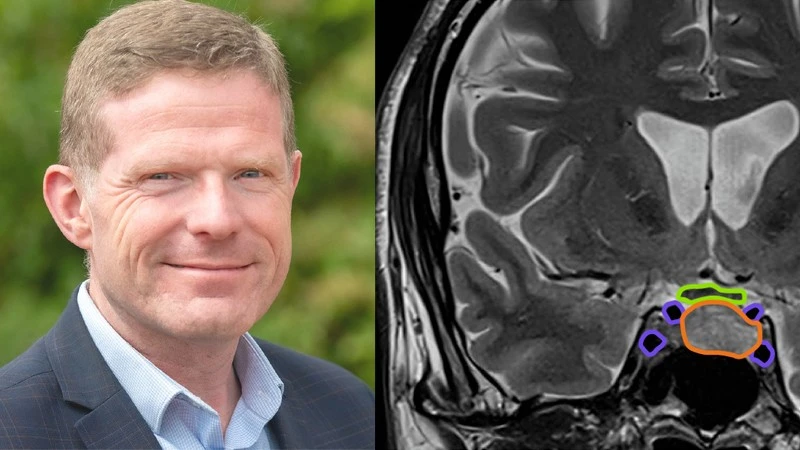
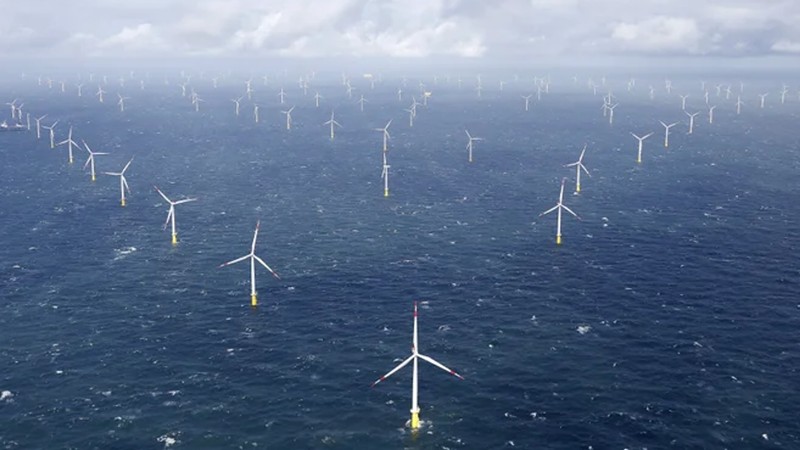
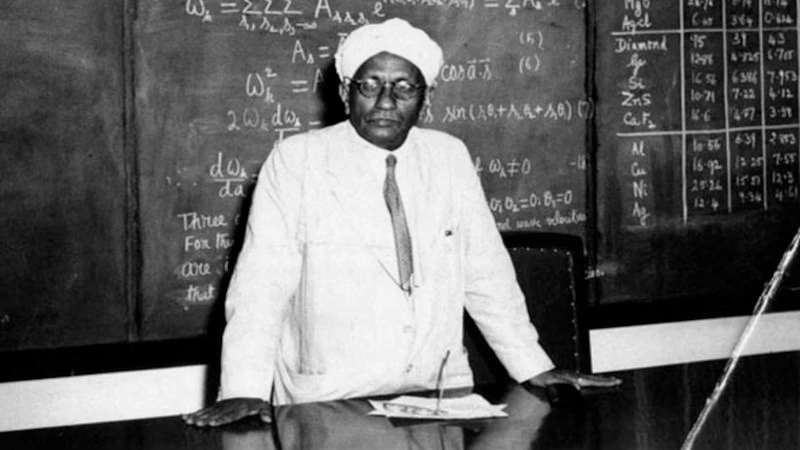
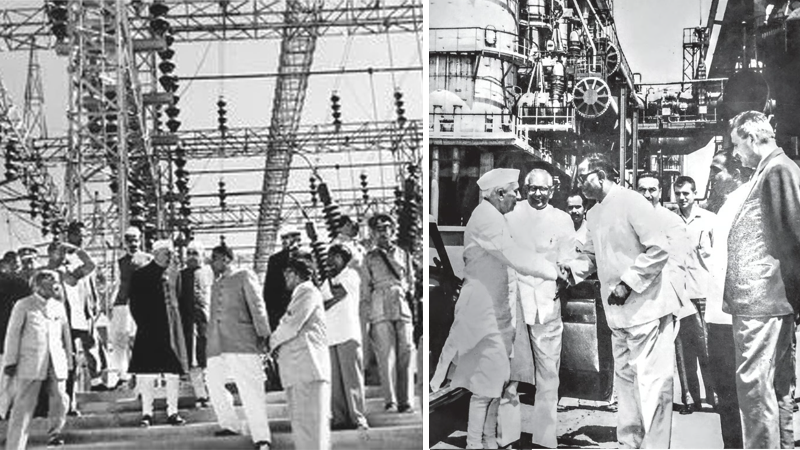
Meadows Foundation Trust Honours Excellence, Service and Human Endeavour

Editorial
Quebec’s Prayer Ban: Secularism or Selective Intolerance?
Quebec’s National Assembly has quietly detonated another culture-war bomb. Bill 62, the 2017 law that banned face coverings while receiving or delivering public services, already felt like a targeted swipe at Muslim women. Now, with the adoption of new regulations under the 2019 Laicity Act (Bill 21), the province has gone further: prayer of any kind is forbidden in government buildings, schools, hospitals, courthouses, and municipal offices. Security guards are empowered to intervene if someone kneels, unrolls a mat, or even bows their head in silent supplication. Violators face fines or expulsion from the premises.
Premier François Legault frames the measure as the logical extension of state neutrality. “The Quebec state is secular,” he repeats, almost liturgically. “Religious acts have no place where the state exercises authority.” The government insists the rule is neutral: crucifixes may still hang in the National Assembly (deemed “cultural heritage”), but a Sikh nurse adjusting her turban in a hospital corridor or a Jewish student laying tefillin in a university library now risks sanction. Neutrality, it seems, has exceptions carved in oak.
Critics are not wrong to call this discriminatory in effect, if not intent. Muslims, whose five daily prayers are timed and conspicuous, bear the heaviest burden. Orthodox Jews, Sikhs, and observant Christians who cross themselves before testifying in court are also caught. The ban does not touch private offices, shopping malls, or sidewalks—only the public sphere where minorities already feel scrutinized. When the state polices the very posture of devotion, it is no longer neutral; it is coercive.
Quebec’s allergy to visible religion is rooted in a specific history: the Quiet Revolution that toppled Catholic dominance in the 1960s. For many Québécois, laïcité is emancipation from centuries of clerical suffocation. Yet today’s laws protect no one from the Church’s former grip; they discipline minorities who never held power. The crucifix stays, the kippah goes. Heritage trumps equality.
Civil liberties groups have already filed challenges, arguing that the Charter of Rights guarantees freedom of conscience and that the notwithstanding clause—Quebec’s preferred shield against judicial review—cannot eternally silence minority claims. Courts may yet strike the prayer ban down, but political damage is harder to reverse. Surveys show a majority of Québécois support the measures; fear of “islamisation,” stoked by talk-radio hosts and opportunistic politicians, runs deeper than constitutional nuance.
Secularism worth defending does not need stormtroopers patrolling prayer. France’s laïcité, often cited as Quebec’s model, bans ostentatious signs in public schools but does not dispatch guards to stop a teenager from whispering a surah in the hallway. True neutrality removes state endorsement of any faith; it does not criminalize private devotion.
Quebec is entitled to its secular identity. It is not entitled to mistake uniformity for liberation. When the state tells citizens how—and where—they may speak to God, it has merely replaced one dogma with another. The revolution devours its children, and now it is measuring prayer rugs for the guillotine.
India’s 8.2% GDP Surge: A Moment of Triumph, A Test of Sustained Reform
India’s latest GDP figures—an impressive 8.2% growth in Q2 FY26—have not only surpassed market expectations but also reaffirmed the country’s position as the fastest-growing major economy in an uncertain global landscape. At a time when advanced economies are slowing, supply chains remain volatile, and global trade battles—most notably U.S. tariffs—continue to disrupt markets, India’s economic resilience stands out as a story of both structural strength and strategic policy continuity.
The July–September 2025 quarter was buoyed primarily by manufacturing and services, reflecting the deepening of India’s production ecosystem and the steady rise in domestic consumption. Manufacturing, in particular, appears to be reaping the benefits of targeted incentives, supply-side reforms, and an expanding global appetite for a China-plus-one sourcing strategy. Services—India’s perennial growth engine—continued to drive value, especially in areas like digital services, finance, logistics, and tourism. Together, these sectors have created a growth momentum that not only beat estimates of 7.4% but also improved upon the already robust 7.8% in Q1.
Market confidence mirrors the macro trend. The Gift Nifty’s 83-point rise soon after the data release underscored investor optimism and reinforced the belief that India’s economic story is not merely cyclical but structurally transformative. Yet, while celebrations are warranted, complacency would be a mistake.
Several challenges loom. Global headwinds—from geopolitical tensions to tightening monetary conditions in major economies—could spill over into India’s export prospects. Domestically, inflation, though largely controlled, remains a vulnerability, especially with volatile food prices. The rural economy, despite signs of recovery, still lags behind urban dynamism. And while manufacturing has surged, sustaining this momentum will require continuous improvements in logistics, energy reliability, labour reforms, and skilling.
Most importantly, India must ensure that this growth translates into quality jobs, rising household incomes, and equitable development. High GDP numbers matter little if they fail to uplift the broad population—particularly the young, the rural poor, and the informal workforce.
The 8.2% surge is therefore both a milestone and a mandate. It reflects the success of reforms but also the responsibility to deepen them. If India can channel this growth into long-term productivity, inclusive prosperity, and resilient institutions, it will not only remain the fastest-growing major economy—it will become a global template for sustainable development in the 21st century.
 SAS Kirmani
Most Popular

Speed of light: The cosmic limit that shapes our universe
September 17, 2025
Beats did announce something, after all
September 17, 2025