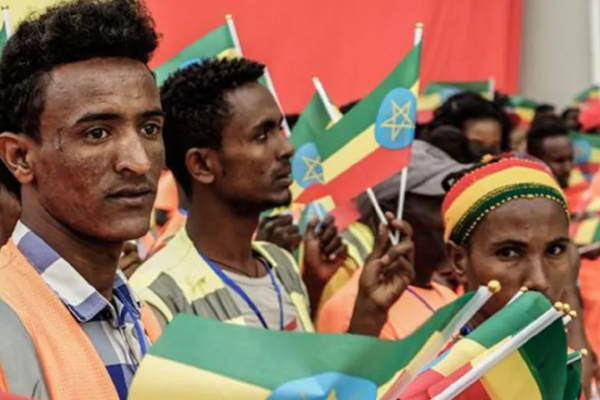
Meadows Foundation Trust Honours Excellence, Service and Human Endeavour

Editorial
A Self-Inflicted Wicket: The BCCI's Suspension and the Cost of Overreach
The unprecedented 90-day suspension of the Board of Control for Cricket in India (BCCI) by the International Cricket Council (ICC) is not merely a regulatory slap on the wrist; it is a seismic shock to the sport’s ecosystem. While the immediate reaction focuses on the chaos surrounding the marquee Pakistan series and the 2027 Champions Trophy, the real story is one of profound institutional failure. The ICC’s charge of “government interference” strikes at the core of a long-simmering conflict between the BCCI’s financial hegemony and the foundational principle of autonomous sporting governance.
For decades, the BCCI, buoyed by India’s colossal market, has operated with immense influence, often bending the ICC to its will. However, this latest episode suggests a critical overreach. The reported interference—likely linked to the recent sports code amendments or direct ministerial appointments—crosses a red line the ICC’s constitution explicitly draws to protect the game’s integrity from political influence. The suspension is a stark message: even the most powerful board is not above the global game’s governance framework.
The immediate consequences are dire and self-inflicted. The potential cancellation of a home series against Pakistan is a devastating blow to fans, players, and broadcasters, and a setback for fragile diplomatic bridges built through sport. More damaging is the cloud over India’s hosting rights for the 2027 Champions Trophy. The ICC will now be forced to consider alternative hosts, jeopardizing not just prestige but also significant economic benefits. Indian cricket’s financial engine risks being forced into a costly neutral gear.
This crisis, however, presents a crucial opportunity. It is a moment for the BCCI to look inward, shed its fortress mentality, and undertake urgent, transparent reforms to ensure its administrative independence is beyond reproach. It must demonstrate to the world that Indian cricket is run by cricketing principles, not political diktat. For the ICC, the test is one of consistency and courage. Having taken this bold step, it must ensure the principle of autonomy is applied uniformly to all member nations, without fear or favour.
Ultimately, the suspension is a painful lesson in the balance of power. Cricket’s centre of gravity may be in India, but its soul depends on a globally respected structure. The path back is clear: restore autonomy, respect the constitution, and remember that the game’s true stakeholders are its players and fans, not its power brokers. The next 90 days will define whether Indian cricket chooses rectification or ruin.
A Historic Bargain, A Daunting Path: The Synchronised Polls Agreement
The announcement of a political consensus on implementing ‘One Nation, One Election’ (ONOE) marks a watershed moment in India’s parliamentary history. The fact that a long-standing and deeply polarising idea has transitioned from rhetorical slogan to a negotiated roadmap is a testament to rare political maturity. The agreement to synchronise state and national polls, with a tentative start date of 2029, suggests that both the treasury and opposition benches have, for now, prioritised systemic reform over immediate partisan gain. This detente deserves cautious applause.
The theoretical benefits of this mammoth exercise are compelling. Proponents rightly argue that perpetual electioneering hampers governance, policy continuity, and fiscal discipline. The enormous expenditure—by both the state and political parties—on near-constant campaigns is a drain on public and private resources. Synchronisation could potentially offer voters a clearer, less cluttered political choice, focusing on a more cohesive national-regional agenda simultaneously. It promises administrative relief for security forces and civil servants perpetually deployed on election duty.
However, the ‘historic’ handshake in Parliament is merely the first step on a fraught journey. The logistical and constitutional challenges are staggering. The agreement will necessitate a complex web of constitutional amendments, particularly to Articles 83, 85, 172, and 174, dealing with the durations of the Lok Sabha and State Assemblies. It will require a robust legal and operational framework to address scenarios like a hung house, a vote of no-confidence, or the premature dissolution of a state government. The current ‘roadmap’ must convincingly answer whether India will adopt a fixed-term legislature model or a complex mechanism of ‘adjusted terms’ and contingency plans.
More critically, the political and federal implications demand sober reflection. Critics fear that synchronised elections will invariably amplify national issues at the cost of state-specific ones, undermining India’s federal fabric and disadvantaging regional parties. The ‘wave’ effect of a national campaign could swamp diverse regional mandates. Ensuring a level playing field for all political parties, big and small, in a behemoth election will be a monumental task for the Election Commission.
Thus, while the consensus is a significant breakthrough, it is the beginning of the debate, not its end. The five-year runway to 2029 must be used for inclusive, scholarly deliberation—not just in Parliament, but across the country—to build a technically sound and democratically resilient model. The success of ONOE will not be measured by the deal struck in a special session, but by the painstaking detail, broad-based buy-in, and unwavering commitment to federal balance that follows. The journey from roadmap to reality will be the true test of this historic bargain.
 SAS Kirmani
Most Popular

Speed of light: The cosmic limit that shapes our universe
September 17, 2025
Beats did announce something, after all
September 17, 2025